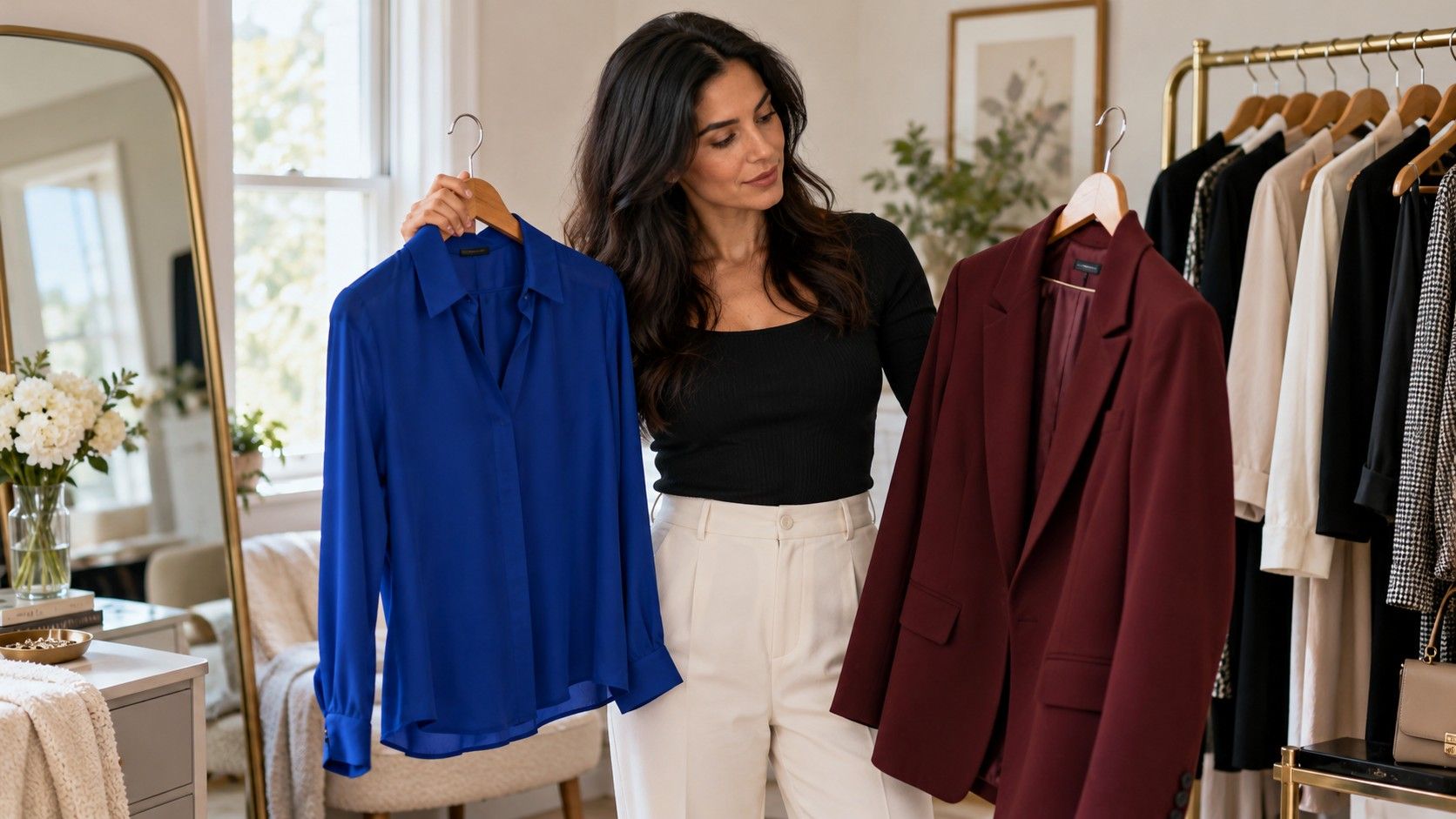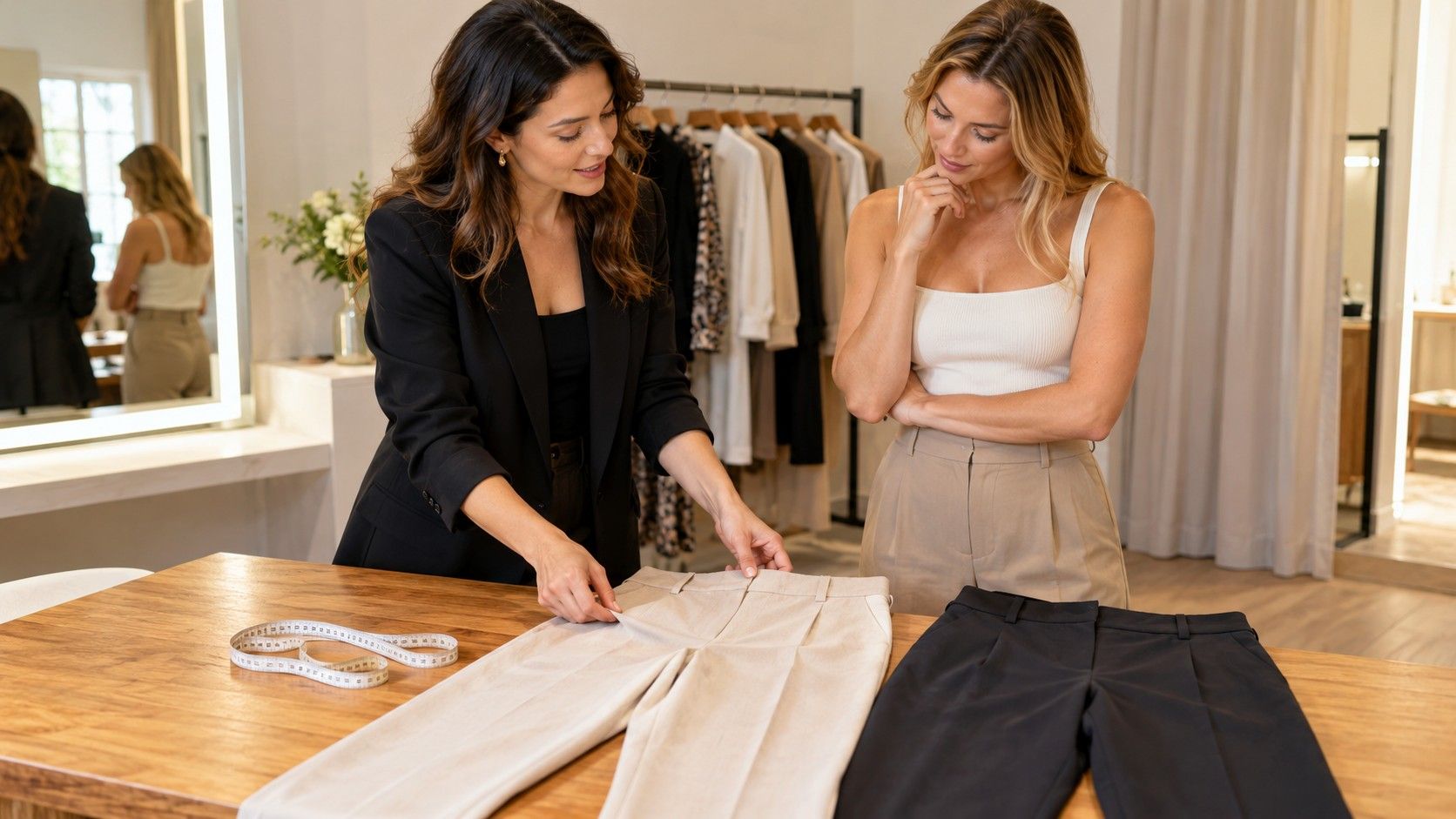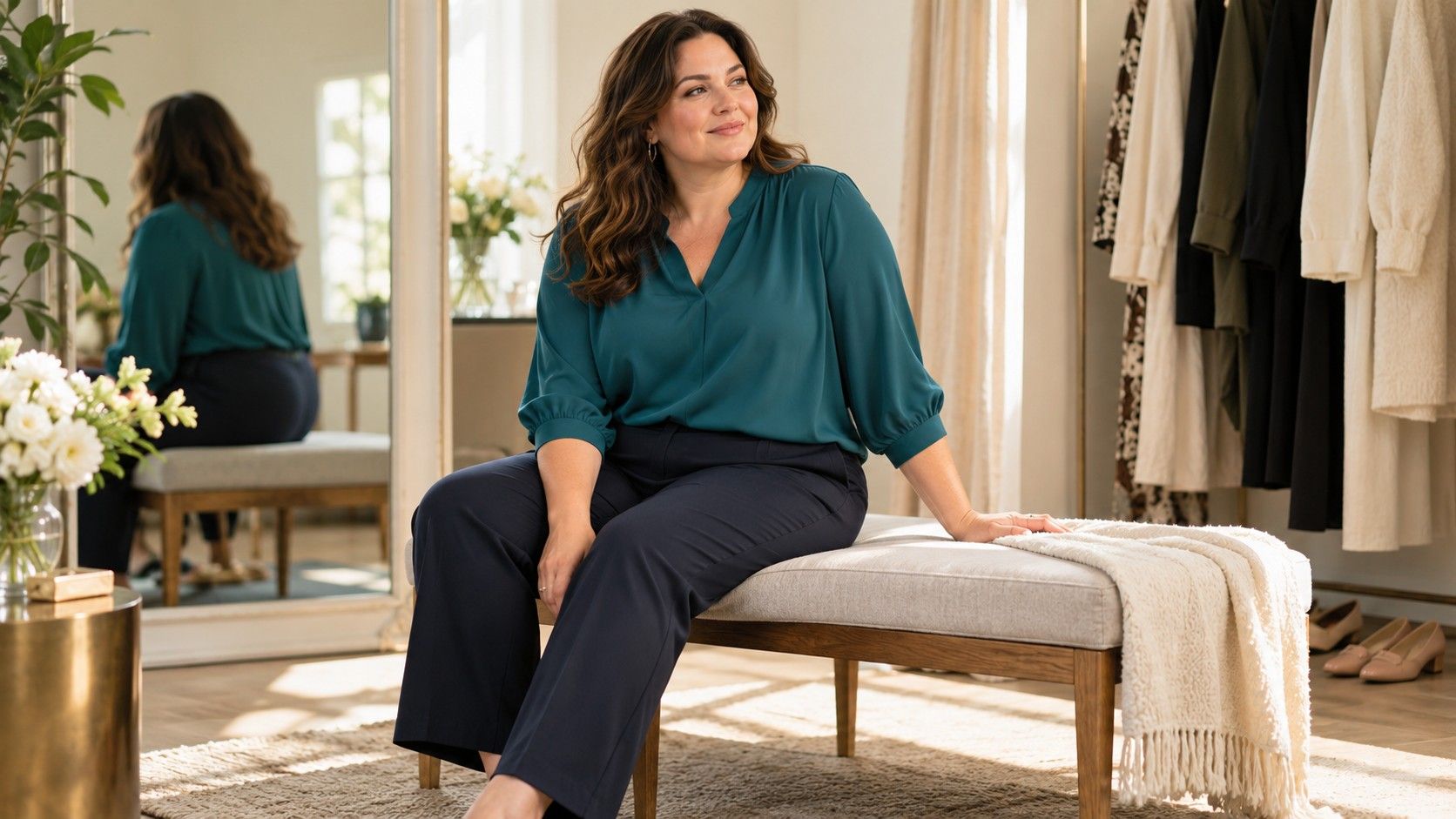
The advice to buy a flowing top sounds simple until the hem catches at the front and the waistband presses when you sit. Apple body shape clothing is more useful as a search term than a prescription: people grouped under the label can have different busts, shoulders, legs and torso lengths. I would start with the points where clothes pinch, lift or slide, then compare cuts that offer space there. Comfort and the line you enjoy are decisions you can test.
Locate the pressure before buying a bigger size
Put on a familiar pair of trousers and notice where the pressure starts. A tight top edge suggests a waistband problem; pulling across the front or through the crotch may involve the rise or the pattern shape. Those problems can occur together. Try another size, but also compare another cut. Extra fabric in the legs does little to solve a front rise that is too short.
A top that swings forward from the bust may need more front length or shaping. Going wider can leave the neckline and shoulders loose while the hem still sits higher at the front. Look at side seams in a mirror and see whether they remain roughly where you expect. Try a bust-shaped shirt or a different fabric before deciding that every woven top is unsuitable.
The apple label does not diagnose health, establish a clothing size or prescribe which areas to conceal. You can wear close-fitting knits, cropped tops or belts if you enjoy them. A practical assessment asks whether the garment lets you breathe normally, sit comfortably and move through your day, and whether you like the result.
Choose a waistband while sitting as well as standing
Take two rises into the fitting room if possible. A higher waist can feel secure, or it can meet a sensitive point below the ribs. A lower rise can be comfortable, or slide when you bend. Sit on a chair, lean forward and stand again. Notice whether you immediately need to pull the trousers back into position. The best rise is the one that works with your torso and the garment construction.
Elastic waists vary considerably. A wide, softly applied band may distribute pressure better than a narrow, firm one, but the casing and elastic strength still matter. Some pull-on trousers have a smooth front and elastic only at the back. Check whether the front panel remains comfortable when seated and whether the waistband twists after movement.
When the waist fits but the seat and thighs look much larger than you want, look for another pattern rather than automatically sizing down. Tailoring the legs may be possible, although pockets and seam placement can make the job more involved. Compare the likely alteration cost with a different trouser style. A returnable option gives you room to test at home with your own chair and shoes.
Find a top length that behaves with your trousers
A hem ending at the waistband can rise when you lift your arms. A much longer top may gather on the lap or catch over the hips. Neither length is inherently wrong. Try reaching to a shelf, sitting and walking, then decide how much readjustment is acceptable. A side slit can help a longer top move, provided it does not open higher than you want.
Fabric weight affects the line as much as length. A thin knit may cling to a waistband ridge; a very stiff fabric can stand away from the body. A fabric with some weight and flexible drape may fall more smoothly, though it can also feel warm. Touch the material and inspect it in ordinary light. A dark colour cannot correct an uncomfortable cut or a lining that grips.
For a partial tuck, use only enough fabric to create the line you want. Thick gathered fabric can make the waistband feel tighter. Try a shorter top or a full untucked hem if the tuck becomes a nuisance. There is no need to maintain a styling trick that works only while standing still.
Try dresses and layers without a concealment rule
An empire seam, placed beneath the bust, can offer room through the middle. It can also land across the bust when the bodice is too short. Check the seam position in profile and raise your arms. If the seam climbs or presses, compare a different bodice cut. Do not assume the style must suit you because a shopping list calls it ideal for an apple shape.
A straight or gently flared dress can allow a clean drape, but check the armholes and bust before judging the rest. Excess width at the neckline is different from deliberate room through the waist. If you want a closer silhouette, a stretch dress with enough ease is another possibility. Notice how the fabric behaves when you sit, including whether the skirt pulls upward.
An open overshirt or jacket creates a visible vertical opening, which you may enjoy aesthetically. Test the garment closed as well if you expect to fasten it outdoors. A jacket purchased only because its open front creates a certain effect may be impractical in wind or cold. Pockets, sleeve room and temperature are part of the decision.
Compare two complete outfits under ordinary conditions
Begin with comfortable trousers and a top you already own. Try a softly draped shirt left out, then a shorter knit over the same trousers. Keep shoes and underwear constant so you can judge the top lengths fairly. Look at the front, side and back, then sit for a few minutes. The version that feels easiest may differ from the one that looks most striking in a still image.
For a casual afternoon, a pull-on woven trouser and a relaxed tee may be sufficient. Check that the tee does not bunch against the waistband when walking and that the pockets stay flat with your phone inside. If you prefer more structure, add an overshirt and roll the sleeves once. Changing one layer is cheaper and more informative than buying an entire prescribed wardrobe.
For work, compare a simple dress with a trouser-and-shirt combination according to the actual day. A dress avoids a separate waistband but may restrict stride; trousers may offer useful pockets but need a better rise. Consider commuting, sitting, weather and washing. Those details make a purchase useful long after the fitting-room impression has faded.
Keep observations that help with the next fitting
Useful notes are specific: the elastic rolled after lunch, the shirt needed more front length, the jacket sleeve was tight over a jumper. They identify what to change. Writing that a garment was wrong for your shape is too broad to help at the next shop. Include the model name, size and fabric, since even clothes from the same brand can use different patterns.
If you use measurements, take them without pulling the tape tight and compare them with the retailer’s instructions. A chart may describe the body a size is intended for, rather than the finished garment. Ease, stretch and lining then determine how it feels. Treat a calculator result as a rough organisational label, and return to the garment when choosing what to buy.
Bodies, preferences and daily routines can change. You do not need to defend an old label to keep wearing a favourite outfit, and you do not need a new label to replace trousers that no longer feel comfortable. Keep the cuts that work now. The most helpful apple shape advice leads to fewer pressure points and more clothes you want to wear.