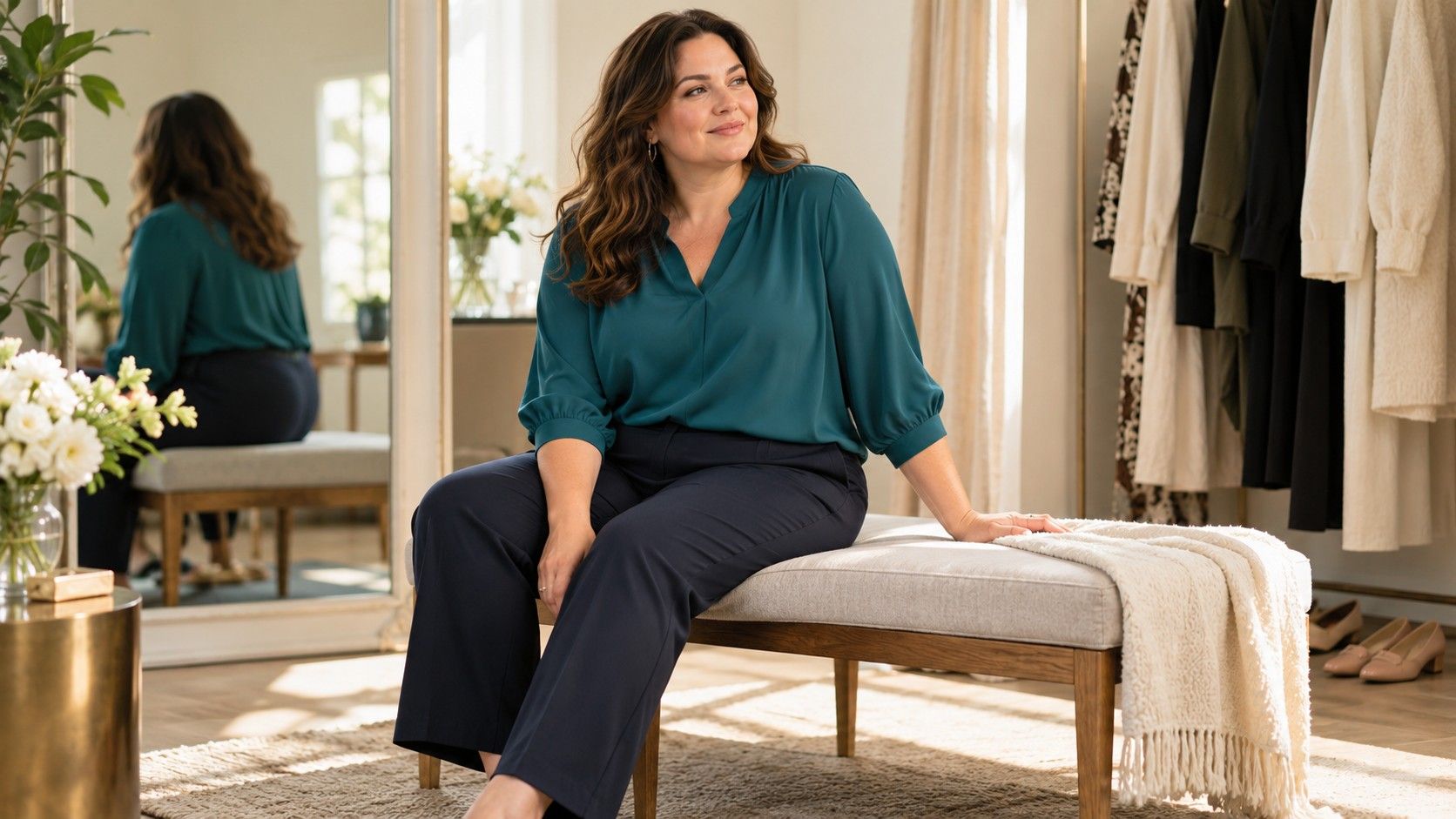
A body type calculator turns a few measurements into a familiar shape name. That can be handy when searching for trouser cuts or comparing styling ideas, but the tidy result hides a lot of missing information. It cannot see your clothes, feel a tight sleeve or decide whether you enjoy a loose silhouette. Treat the result as a rough browsing aid, then check it against the fit problem that brought you to the calculator.
Read the inputs before you trust the result
Most measurement-based tools compare bust, waist and hip figures using their own thresholds. Some include shoulders; others do not. Their definitions of pear, hourglass or rectangle are not necessarily identical. A small difference near a boundary may change the name on the screen without producing any meaningful change in how a jacket fits.
Check what each box expects. “Shoulders” might mean a circumference around the upper body or a width across a particular area. A full-hip measurement is different from a high-hip measurement. If the site does not explain the landmarks, the result deserves less confidence. Make sure you have selected inches or centimetres before entering anything.
A calculator should also explain enough about its method for you to understand the output. You need not inspect computer code, but a simple account of which ratios it compares is useful. An unexplained percentage such as “92% hourglass” can look precise while saying very little. It is not automatically a measure of scientific accuracy or certainty.
Use the label for a search, then look beyond the search term
A pear result might lead you to trousers sold with more room through the hips relative to the waist. That is a useful shopping direction. It does not mean every garment tagged “curvy” will fit, because brands use that word differently and may change the waistband, seat depth or thigh cut by different amounts. Read the actual size chart and product description.
An inverted-triangle result can help you find discussions of shoulder room or jacket proportions. Yet a calculator cannot tell whether a particular armhole lets you reach forward, whether a sleeve cap is too tight or whether you prefer a structured shoulder. Those questions belong in the fitting room, where you can test the fabric and construction.
I would use a result to generate two or three options, then retire it for the afternoon. Try a straight skirt and a flared one, or a relaxed shirt and a shaped one, keeping the rest of the outfit similar. A tool earns its place by narrowing a search. It loses its value when it starts vetoing clothes that fit and make sense for your day.
Know which details three measurements cannot capture
Circumferences describe the distance around the body. They do not describe how that distance is distributed between front, back and sides. Two people with the same hip measurement can need different seat shaping or different room at the abdomen. Torso length, shoulder slope, bust position and preferred waistband height are also absent from a typical calculation.
The garment adds another set of variables. A fluid viscose skirt and a stiff cotton skirt of the same width can hang differently. Stretch, lining, seam placement and the direction of the grain affect movement. Even within one brand, a fitted dress and an oversized dress may be designed around very different amounts of ease.
| Question | Calculator contribution | Better next check |
|---|---|---|
| Which broad shape descriptions resemble my ratios? | A rough comparison | Read the tool’s definitions |
| Which size should I order? | Limited help | Brand chart, fabric and garment measurements |
| Why does this sleeve restrict movement? | No reliable diagnosis | Armhole, sleeve and upper-back fit |
| Which silhouette will I enjoy? | No personal preference information | Compare complete outfits in use |
This is why a disappointing purchase does not disprove your body. It usually shows that the information was too limited for the decision. Record the actual failure, such as a short rise or a tight upper arm, so the next search becomes more specific.
Do not translate a shape result into another style system
Body-shape calculators, Kibbe discussions and style-essence frameworks answer different questions. A bust-to-hip ratio cannot establish a Kibbe image identity, and a shape label does not determine an essence blend. Claims that one result automatically maps to another often flatten the systems until very little useful information remains.
Seasonal colour analysis concerns a different set of visual comparisons again. A rectangle result cannot tell you whether a cool blue or a warm brown works well near your face. If colour is the problem, compare colour; if a waistband is the problem, inspect the waistband. Keeping those tasks separate makes an outfit easier to troubleshoot.
A calculator also cannot establish health, fitness, character or attractiveness. A fashion label is a description used within a particular styling convention. It is not a diagnosis and should not be presented as a hierarchy of better and worse bodies. Close the page if its advice depends on making you anxious about a harmless proportion.
Work through one purchase instead of rebuilding your wardrobe
Say you need trousers for a day that includes sitting at a desk and walking home. Your calculator suggests a pear shape, while the trousers in your usual size fit the hips but leave space behind the waist. Start with the visible issue: compare a more curved waistband or another cut with a different waist-to-hip relationship.
Try the next candidate with the same underwear and shoes. Sit, walk and put your hands in the pockets. Check whether the waistband stays in place without a belt pulled tightly enough to bunch the fabric. If the hip area fits but the rise feels wrong, a different rise or pattern may help more than moving up and down the size range.
Now compare the look you want. A wide leg may give you the movement and outline you enjoy; a tapered leg may work better with the shoes you already own. Neither choice needs permission from a shape chart. The practical decision combines fit, use and taste, with the calculator supplying only an early search clue.
Before paying for an alteration, ask a tailor to inspect the actual garment. Taking in a waist can disturb pockets or seam placement, and some fabrics retain needle marks. An inexpensive item with a complicated waistband may cost more to alter than you expect. A shape result does not settle that calculation.
Keep the useful part and discard the false certainty
If two tools give different results, first compare their inputs and methods. Retake a measurement only if there is a reason to suspect a mistake. You do not need to keep trying websites until one produces the name you expected. A borderline result can simply mean that your proportions do not fit neatly into that tool’s categories.
Keep a small record of garments that work: brand, size, fabric, rise, length and any alterations. “Medium in this relaxed cotton shirt; upper arms comfortable” is actionable. “Confirmed triangle” is much less useful when the next shop uses a different pattern block. Over time, your fit notes become a better shopping tool than repeated calculations.
Consider privacy before uploading photographs or entering information. Check whether a service requires an account, what it stores and whether you can get the basic comparison without sharing more than you want. Measurements can stay in a private notebook. The best outcome is a calmer, shorter search for clothes, with enough uncertainty left to let the fitting room change your mind.