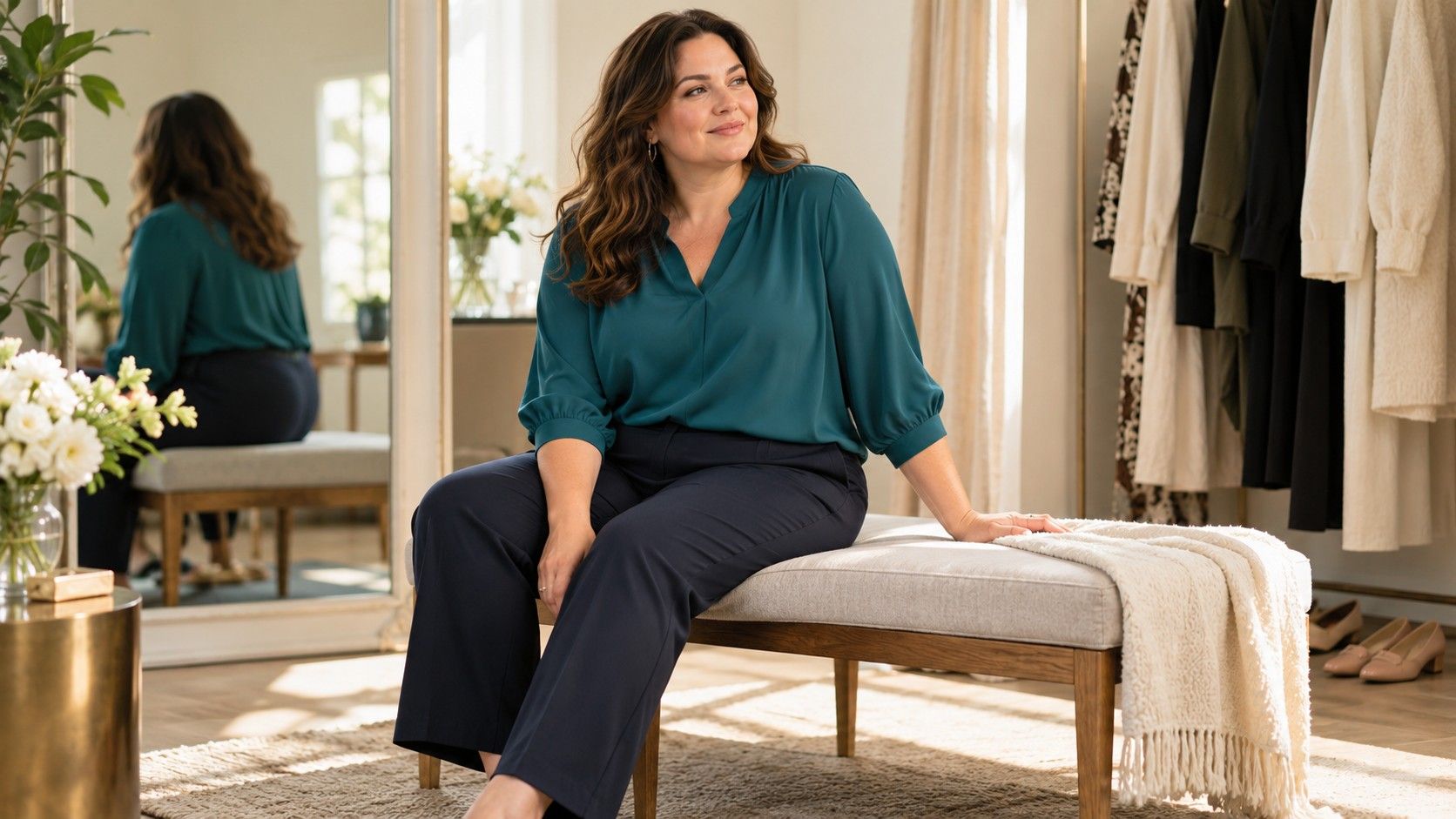
A fitted dress can look convincing in the mirror and become uncomfortable as soon as you sit down. That is the problem worth solving before choosing another hourglass outfit. The familiar label describes a relationship between bust, waist and hips; it does not specify shoulder slope, torso length, bust projection or the shape a clothing brand used. I would use it as a shopping clue, then let the seams, waistband and movement test decide whether a garment earns its place.
Start where the garment pulls, not where the label points
Look at a shirt buttoned normally, with your arms relaxed. A gap at the bust can indicate that the front needs more room or a different pattern. Buying a larger size may close the gap while making the shoulders and sleeves too large. Try a cut designed with more bust room before assuming you must accept one of those problems. A stretchy fabric can help, but stretch under constant tension is still tension.
In trousers, a waistband that stands away at the back while the seat fits suggests a mismatch between the garment waist and hip proportions. A curvier pattern may work better than a smaller size. Sizing down can make the pocket openings flare and the front crotch pull. Check the back in a second mirror and sit on a chair before deciding; a standing photograph misses both problems.
The hourglass description does not require you to show your waist. A straight dress, loose shirt or wide-leg trouser is a legitimate choice. Separate the appearance you want from the physical space the garment needs. You can prefer a roomy silhouette and still expect the shoulder seams, crotch depth and armholes to let you move comfortably.
Give a waistband a full seated test
A waistband sits against a body that changes shape with posture. Fasten trousers without holding your breath, sit with both feet on the floor, and lean forward as if tying a shoe. Notice whether the top edge digs in, rolls or slides. Try the same size in a different rise. A high rise may land at a narrow point on one person and press against the ribs on another; height labels alone cannot predict that.
Compare the waistband construction as well as the size. A contoured band follows a shaped upper edge, while a straight band can stand away from the body. Partial elastic can allow movement, though a strong elastic edge may feel restrictive. If the trousers fit through the seat and thighs, ask a tailor whether reducing the waist is feasible. Belt loops, pockets and seam placement affect the answer.
A belt can hold trousers up, but pulling a large waistband into folds usually creates bulk and can distort the fly. Before buying on the promise of an alteration, obtain a quote and check the return conditions. A small change to a simple waistband is different from rebuilding a lined skirt with a side zip. The less expensive garment can become the more expensive choice.
Let shirts and jackets make room in the right places
For hourglass clothing fit, darts and seam shaping can be more useful than a fabric with maximum stretch. A bust dart creates room in the front; a princess seam can distribute shaping along the bodice. Neither guarantees a good fit. The fullest part of the garment needs to sit near the fullest part of your bust, and the waist shaping needs to reach the place where you want it.
Try a jacket over the layer you intend to wear underneath. Button it, reach forward and raise your hands to desk height. Watch for the fronts pulling into a sharp X, the collar lifting or the whole jacket travelling upward. These are reasons to compare another cut. An open jacket may suit your outfit perfectly, but it should be an intentional styling choice rather than the only way to tolerate a tight garment.
An oversized shirt can also work well. Check that the armhole allows reach, the sleeve length is manageable and the hem falls where you like it. A small front tuck changes the line without requiring a tightly fitted waist. If the tuck produces an uncomfortable knot of fabric under a waistband, use a lighter shirt or leave it out. The outfit has to survive more than a photograph.
Compare fabric behaviour before choosing a dress
Two dresses with the same waist measurement can behave very differently. A firm woven fabric holds its shape and needs enough room for movement. A soft jersey follows the body more closely and may reveal the edges of underwear or pocket bags. A lining can change both the drape and the amount of stretch. Read the composition label, then handle and try on the actual garment.
A wrap dress allows some adjustment, but check the neckline when sitting and leaning forward. The overlap at the skirt must also remain comfortable while walking. If you need constant rearrangement, a different wrap depth or a fixed crossover design may be more practical. There is no reason to buy the shape simply because it appears on a list of recommended hourglass clothes.
A straight dress offers another option. Choose sufficient room through bust and hips, then decide whether you like the loose waist. A belt can add definition, though it may lift the hem and gather excess fabric. Try the dress with and without it before purchasing. A smooth, relaxed line is a complete result; waist emphasis is an aesthetic preference.
Build one outfit around a normal working day
For a day involving a commute and several hours at a desk, start with trousers that pass the seated test. Add a shirt that stays closed at the bust when you reach for a bag. Then try the shoes and outer layer you actually use. Trousers that skim the floor in fitting-room heels may drag with flat commuting shoes, while a jacket that fits a thin camisole may be cramped over a work shirt.
Keep the comparison small. If the waistband works but the outfit feels too formal, change the shirt fabric or shoes first. If the whole outfit rides upward, investigate garment lengths and fit before changing the silhouette. Altering five elements at once makes it hard to understand which change helped. A useful outfit should have a clear reason to be repeated.
Check practical details that a shape chart rarely mentions: pockets deep enough for your phone, sleeves that clear a keyboard, a skirt slit that allows your walking stride. Consider laundering too. A dress that needs special cleaning after every wear may be a poor everyday purchase even when its proportions are excellent.
Record fit details that make the next purchase easier
Write down the brand, model, size, rise and fabric of trousers that work, rather than keeping only the phrase hourglass fit. Brands can change patterns between styles and seasons, so the record is a starting point. Note what the waistband does after sitting for an hour and whether the knees or seat stretch out. First impressions and actual wear sometimes differ.
For shirts and dresses, record whether you needed extra bust room, a shorter bodice or a waist alteration. These observations tell you more than a new body label. Measurements can help when comparing a size chart, but the chart is not a promise about ease or construction. Check whether the retailer lists body measurements or finished garment measurements.
Keep clothes that support your activities and preferred appearance. If a supposedly perfect hourglass piece needs constant adjustment, it has failed a practical test. If a loose dress feels comfortable and looks right to you, that is useful evidence too. The aim is a wardrobe with fewer unresolved fit problems, with enough freedom to enjoy different shapes.