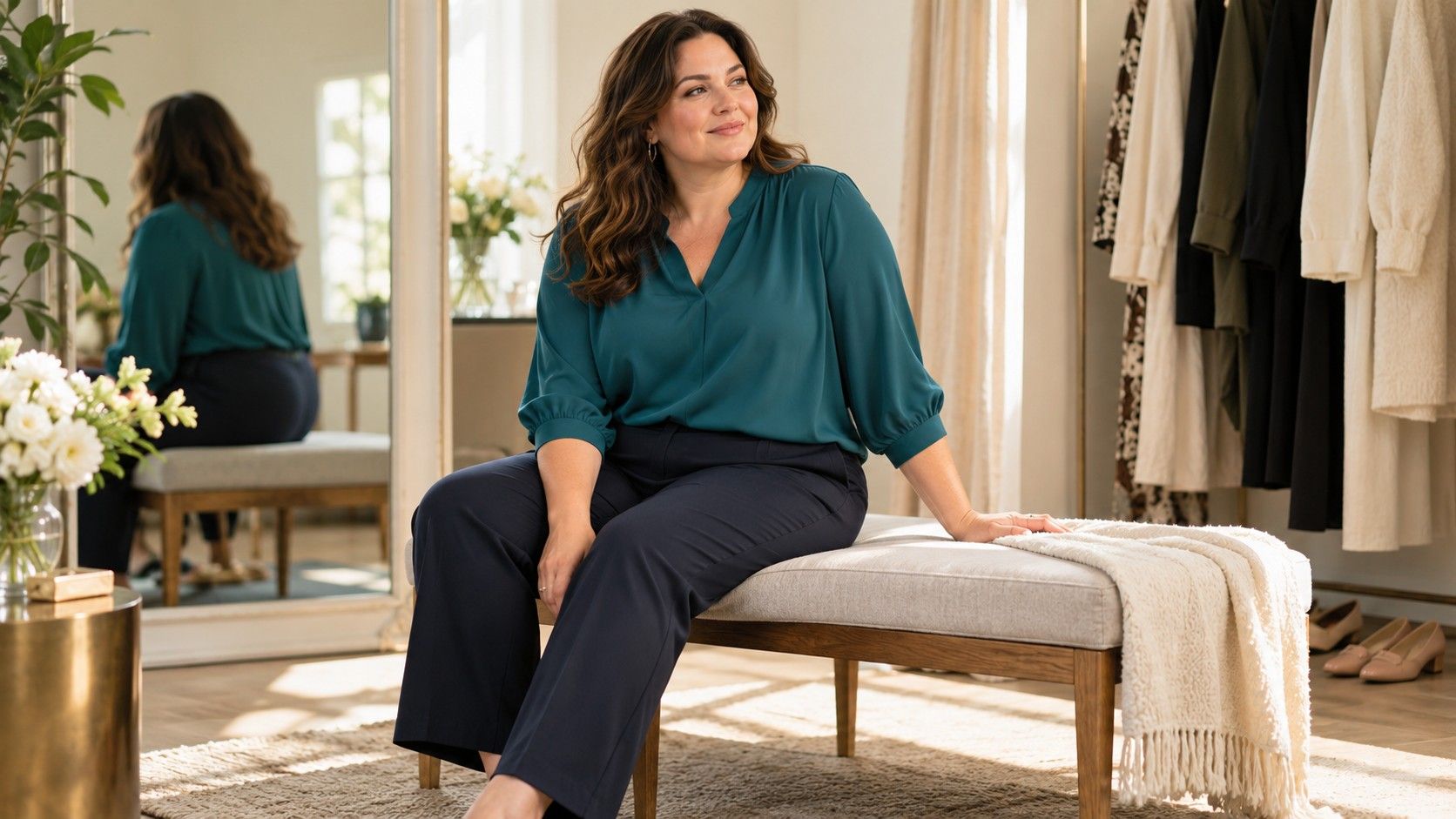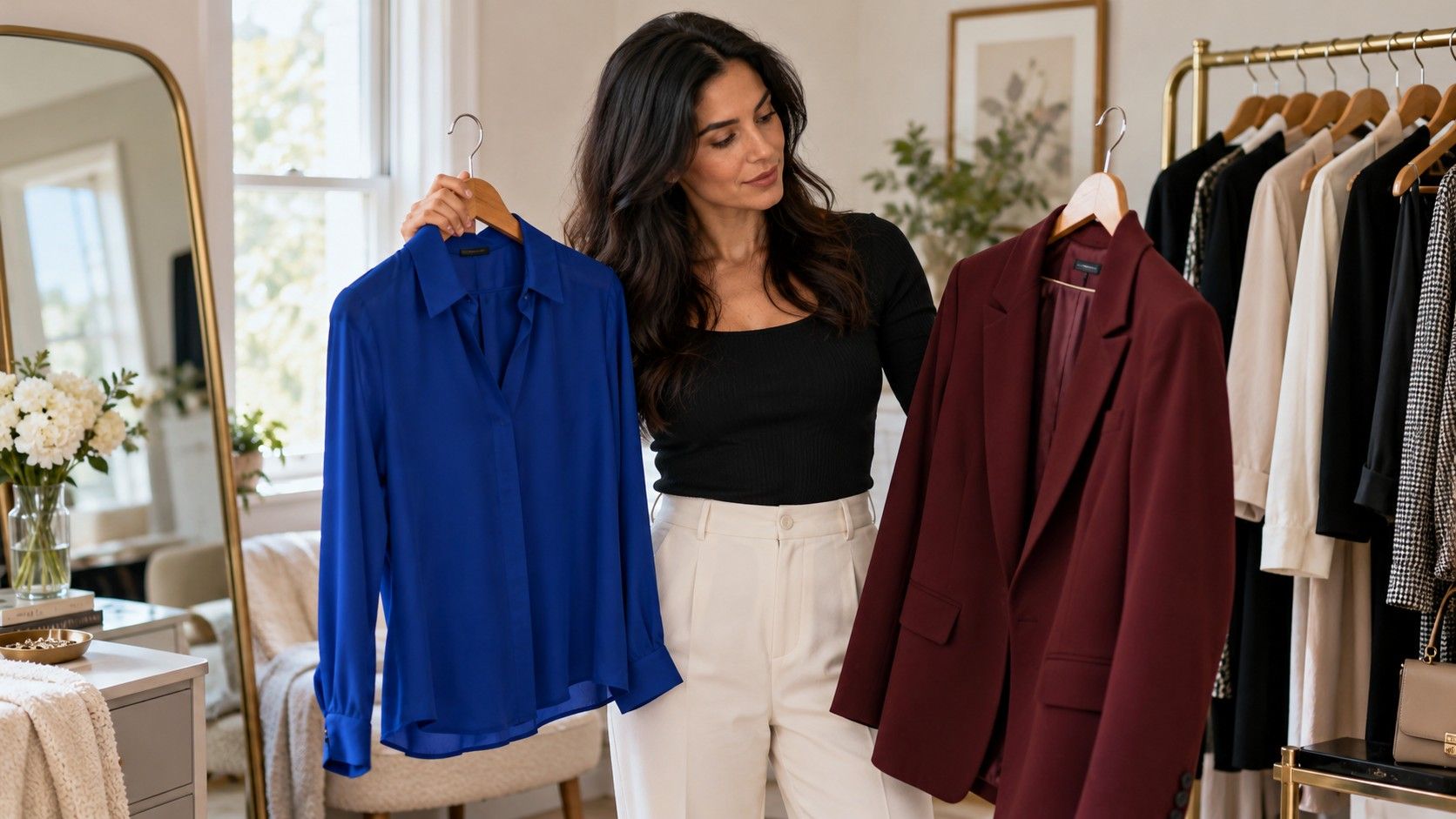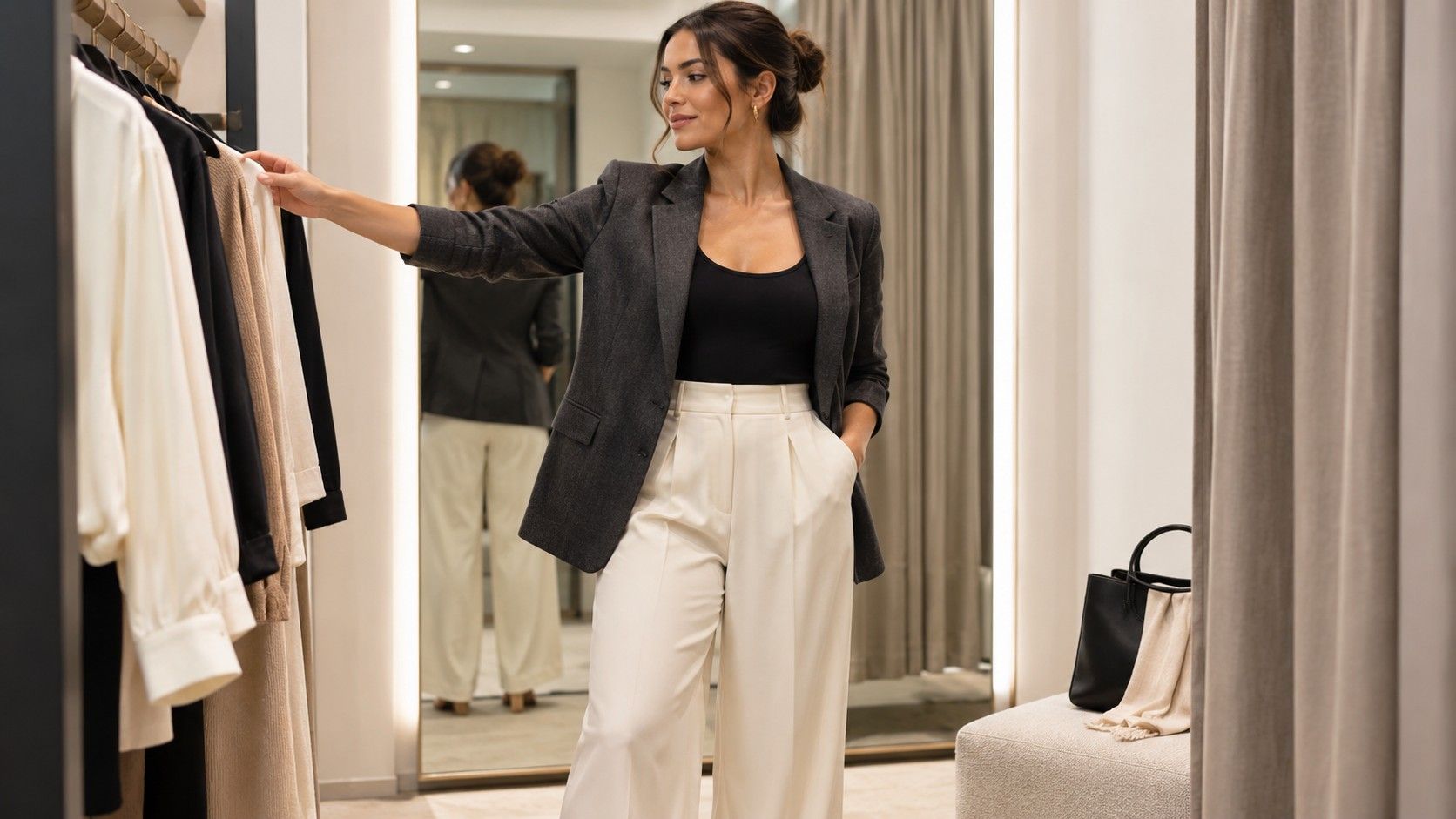
Inverted triangle outfits are often presented as a project in making shoulders disappear. A more useful starting point is a top that lets you reach forward and a jacket that sits comfortably across the back. The shape description usually refers to shoulders appearing wider than the hips; it says little about your size, bust, height or preferred clothes. Use it to investigate fit, then decide whether you want to emphasise that shoulder line, soften it or give it no particular attention.
Decide whether you want room, structure or a different silhouette
Begin with the item that feels wrong. A shirt pulling across the back is a fit issue. Disliking the visual width of a puff sleeve is a preference about the garment. They can happen together, but choosing a visually quieter sleeve will not necessarily give you more movement. Write down which problem you are trying to solve before comparing styles.
A shape label cannot tell you how broad a jacket’s shoulders should be in centimetres. Shoulder slope, armhole placement and upper-arm room influence the fit as well. A structured jacket, a soft cardigan and a dropped-shoulder sweatshirt are designed to sit differently. The same seam-position rule cannot be applied to all three.
I would keep a well-fitting top nearby as a reference, even if it is an unremarkable T-shirt. Notice what you like about its neckline, fabric and movement. That gives you a concrete comparison in a shop. A diagram saying that your shoulders need balancing provides much less information about the sleeve you are about to buy.
Test the upper back and sleeves before sizing up
Put on the top and let your arms rest naturally. Then reach forward as if holding a steering wheel, lift your hands towards a shelf and sit down. Some change in the fabric is normal; the useful question is whether the garment restricts you or repeatedly shifts out of place. Check the neckline after movement rather than arranging it again immediately.
If the upper back feels tight, try a neighbouring size and a different cut. Going larger may add room everywhere, leaving the neckline or body too loose while the sleeve still feels awkward. A pattern with a different armhole or shoulder shape may work better. In a tailored garment, the upper sleeve and shoulder area can be costly to alter, so do not assume a quick fix will be available.
For a conventional set-in sleeve, the shoulder seam gives a useful fitting clue, but intentionally extended or dropped shoulders need a different reading. Look at the garment’s intended construction. A seam below the shoulder is not automatically a fault in a relaxed sweatshirt; a formal jacket pulling sharply at the sleeve head is another matter.
Compare fabrics too. A fluid blouse may fold softly over the shoulder area, while a crisp poplin shirt holds a clearer line. Stretch can increase comfort but cannot guarantee good pattern shaping. Try the movement checks in the actual fabric and size you plan to buy, rather than relying on the fabric name in an online description.
Choose necklines and sleeve detail for the effect you enjoy
A V-neck creates a different opening from a crew neck, and a broad boat neck draws a different horizontal line. None is universally prohibited for wider shoulders. Look at the whole top, including neckline depth, fabric, sleeve shape and where the hem lands. A small change in one detail can matter more than the broad name of the neckline.
If you prefer less visual emphasis at the shoulder, try a smooth sleeve head and restrained detail in that area. If you enjoy a strong shoulder, explore a defined jacket, sleeveless top or puff sleeve. Both approaches are legitimate. Check that any padding or gathered fabric creates a shape you want rather than accepting it because a style guide promises “balance.”
| Your aim | A comparison to try | Practical check |
|---|---|---|
| Easier reaching | Two tops with different sleeve and armhole cuts | Reach forward without holding the hem down |
| Quieter shoulder detail | Smooth sleeve head versus gathers | Compare the full outfit, not a cropped photo |
| A defined shoulder line | Structured jacket versus soft cardigan | Check comfort under your coat |
| More volume below | Wide-leg trousers or a fuller skirt | Confirm waist fit and walking room |
Jewellery, hair and eyewear can change the impression near the neckline as well. Try the top with the accessories you actually wear. There is little value in selecting a neckline that works only after removing the glasses, necklace or practical hairstyle you use every day.
Fit the lower half before adding volume for balance
Wide-leg trousers and full skirts are common suggestions for inverted-triangle proportions because they can add width below. They are useful options when you like the result. They still need to fit your waist, hips and rise. Adding excess fabric to a poor waistband fit merely creates a larger uncomfortable garment.
If trousers fit the waist but look roomier through the hips than you want, compare a straighter pattern or a different size range. Do not assume your hips need padding or that you must choose a full skirt. A narrow trouser with a strong-shouldered jacket can make a deliberate, clear silhouette. The question is whether that is the outfit you want.
Length changes the visual relationship between top and bottom. A long untucked shirt over wide trousers produces a different outline from a shorter top over the same pair. Compare those lengths before buying another bottom half. Sometimes the experiment requires folding a hem temporarily or changing the tuck, not purchasing a new wardrobe.
Try one jacket in two complete outfits
Take a jacket that fits through the shoulders and upper back. First wear it with a simple knit and straight trousers. Button or fasten it as intended, then sit and reach forward. If the front pulls or the collar lifts away markedly, compare the size and cut; do not judge the shape only with the jacket held open.
Next try the same jacket with a fuller skirt or wider trousers. Keep the shoes and base-layer colour similar if you want to isolate the silhouette change. Notice whether you prefer a more even distribution of volume or the stronger upper outline of the first outfit. Either result teaches you something about taste rather than proving a shape rule.
Check the layers you need for the season. A jacket that fits over a thin camisole may restrict you over a substantial sweater. Sleeve lining can affect how easily layers slide, while a bulky knit may crowd the armhole. Bring the intended underlayer when possible. The correct comparison is the outfit you will actually wear.
For dresses, check the relationship between shoulder fit and the lower half. A dress with a generous skirt may solve one preference but still need a different bodice cut. Separates let you choose different sizes above and below; that can be simpler than altering a one-piece garment to accommodate both areas.
Keep the shoulder line you like and the fit information you need
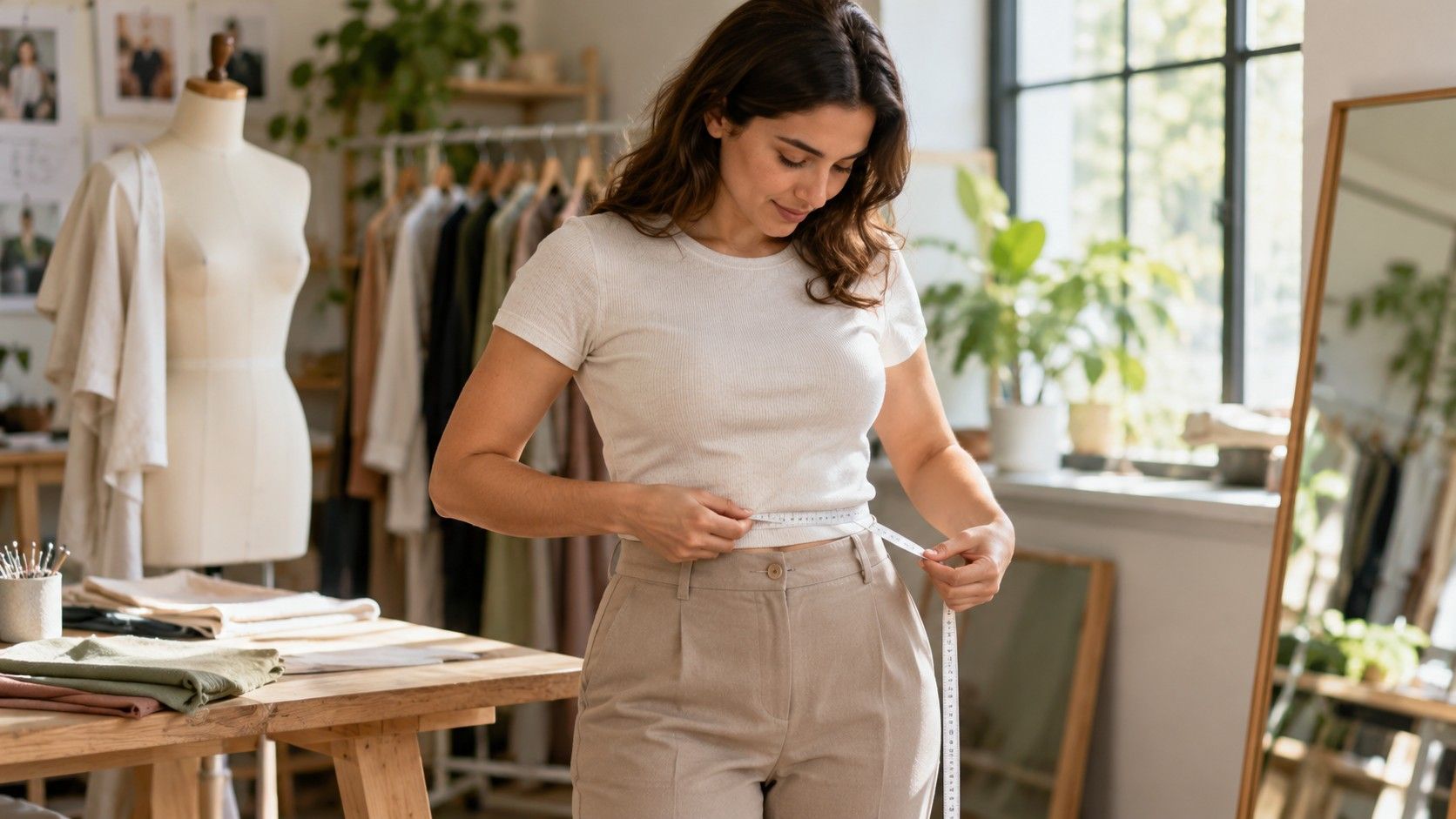
Save notes about neckline depth, sleeve construction, fabric and the layers worn underneath. If shopping online, compare product measurements with a garment you own, using the same measurement method. A shoulder-width number helps only when the garment has comparable construction; a dropped shoulder makes a direct comparison less useful.
Photographs can help you remember alternatives, but use a consistent camera position. A close camera aimed down from above can exaggerate the upper half of the body. Step back, include the whole outfit and compare pictures taken under similar conditions. Use the images as a memory aid, while letting comfort and movement have their own say.
There is no obligation to disguise wider shoulders. An inverted-triangle description can point you towards more thoughtful sleeve fitting and a few silhouette experiments. Once a garment gives you room to move, the remaining choices belong to you: a clean column, generous trousers, a strong jacket or whatever works with the clothes and life you already have.