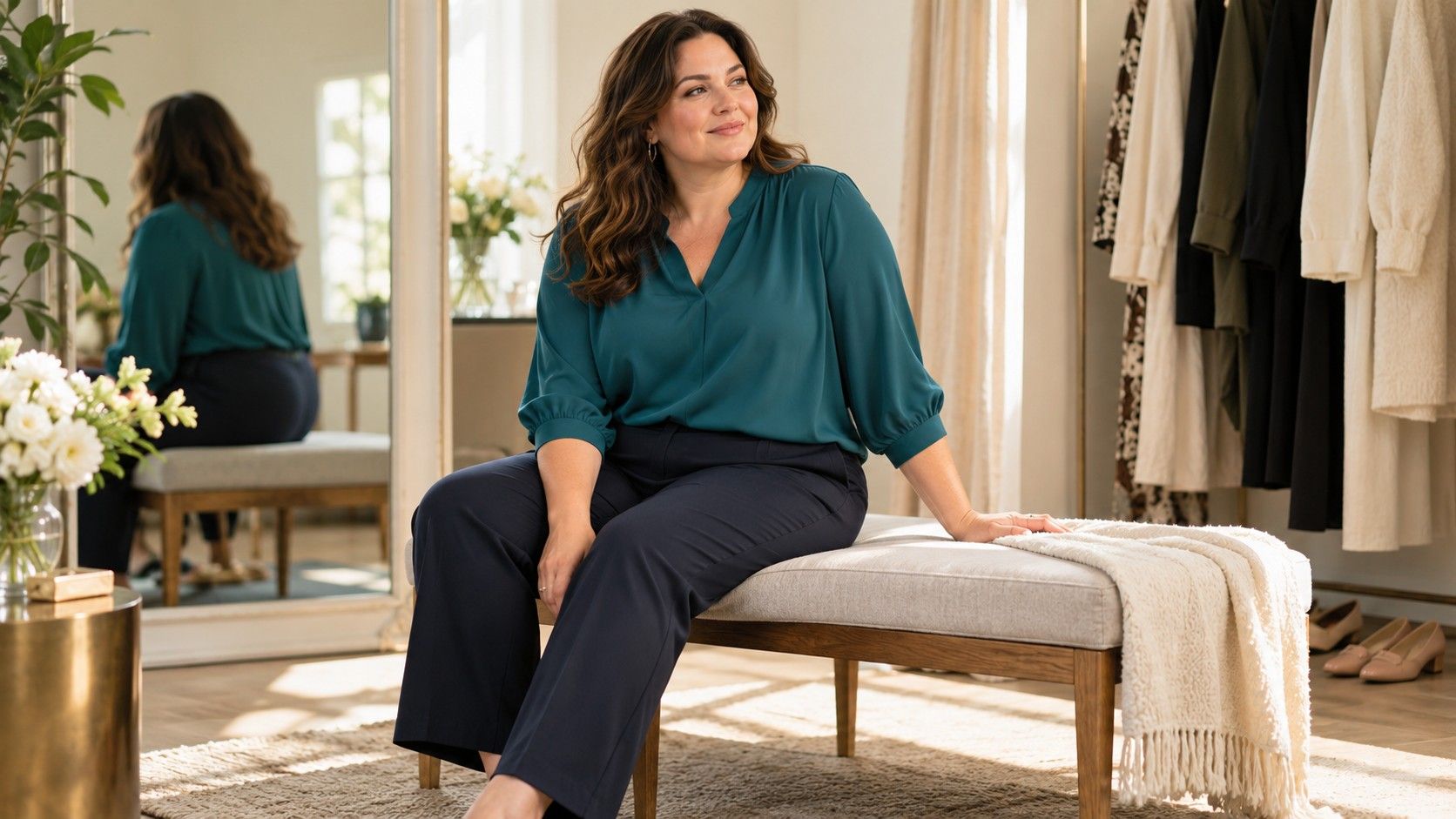
The word accommodation can sound as if a body comes with a technical specification that clothes must obey. In Kibbe discussions it belongs to a particular styling framework, and it should not be confused with ordinary sizing or tailoring. A tight shoulder seam needs a fitting solution before it needs an interpretation. I would explore Kibbe accommodations through clothes you can actually compare, keeping the observations precise and leaving the identity question open when the evidence is unclear.
Separate a tight garment from a styling question
Begin with a shirt that lets you reach forward, sit and raise your arms without strain. If the buttons pull apart or the collar shifts sharply, try another size or cut. The immediate question is whether the pattern provides enough room in the right place. That problem does not prove a Kibbe accommodation, and changing the terminology will not create extra fabric.
Every garment involves practical allowances for the body and for movement. A woven jacket, a stretch tee and a loose cardigan achieve that in different ways. Kibbe accommodation language concerns the framework’s approach to the overall line and styling of clothes. These conversations can inform each other, but they are not the same test. Keep a note of actual pulling separately from a preference for a certain silhouette.
The framework is subjective, not a scientific classification or a medical assessment. Measurements alone cannot establish an Image Identity. The aim is a useful experiment: see what happens when you change the construction or arrangement of an outfit, and decide whether that change is worth repeating.
Make one comparison you can understand
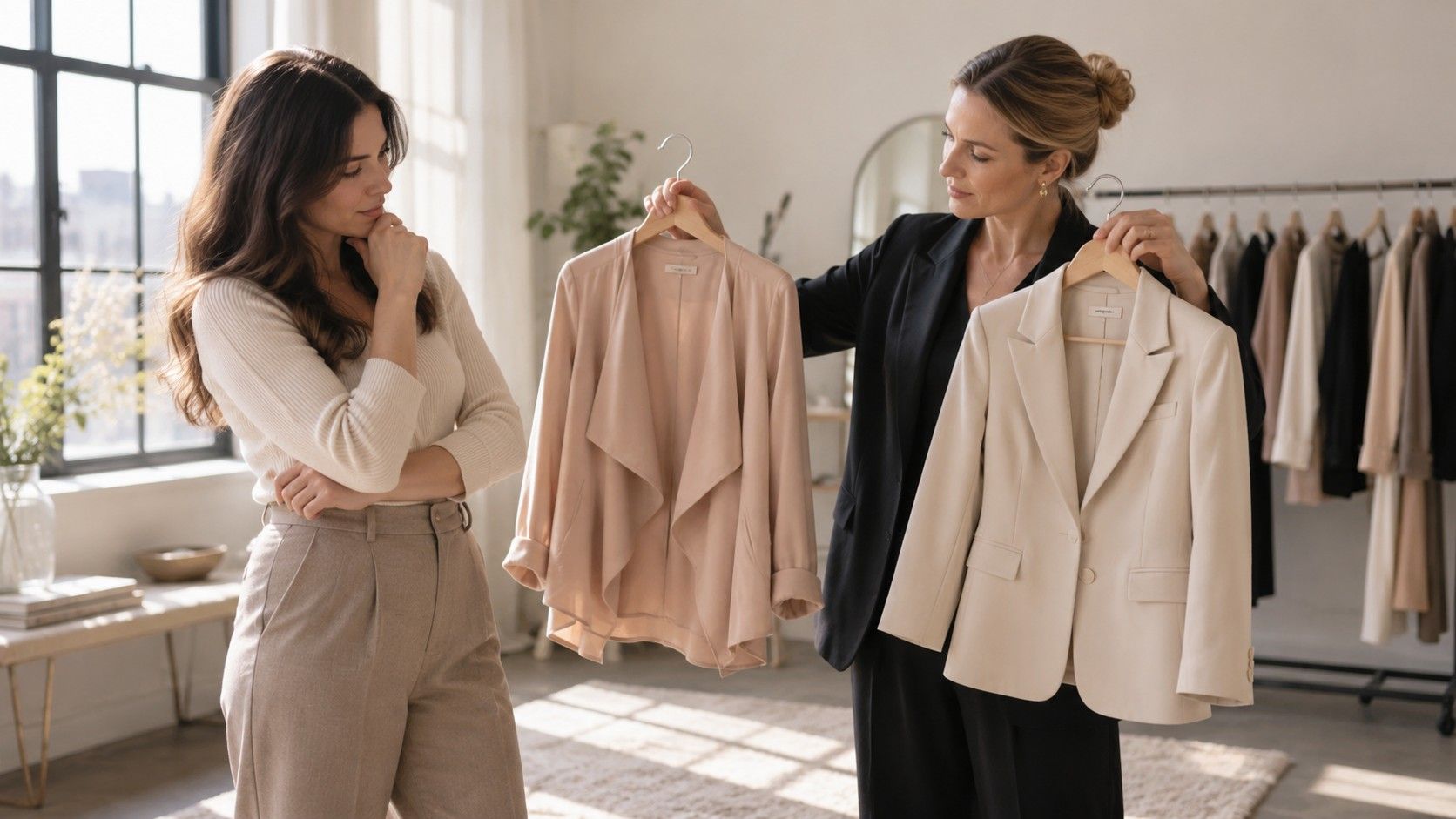
Choose an everyday base such as trousers, a simple top and shoes you can comfortably walk in. Compare two outer layers while keeping the rest constant. One could be a softly draped cardigan; the other a firmer jacket. Use versions that fit reasonably well, since a painfully tight jacket makes a poor aesthetic comparison regardless of the framework.
Notice concrete effects. Does the soft layer fall into folds at the waist? Does the firm jacket hold a straighter outline? Does either hem catch on a pocket or move awkwardly as you sit? An observation such as the jacket hem lands on the trouser pocket is more useful than a general verdict that your body needs a certain style.
Wear each version briefly around the room rather than making a decision in the first mirror glance. Lift a bag, reach for a shelf and sit at a desk. A garment can make an appealing still image yet feel distracting in motion. Both appearance and use belong in the record; you are choosing clothes for a moving person.
Explore a continuous line without inventing a height rule
One accessible experiment is to compare a more continuous visual line with a clearly divided one. Try a top and trousers in similar tones, then change the top to a contrasting colour. Keep the fit and footwear similar. Notice whether you enjoy the continuity or prefer the break at the waist. This is an aesthetic comparison, not a calculation of identity.
Garment length and detail affect the result too. A long open layer can create another line, while a short jacket draws attention to its hem. Try moving only that layer before changing everything else. You may like a continuous outfit for work and a more divided arrangement for casual wear. Preferences can depend on the occasion, the fabric and the rest of the outfit.
Do not infer an official accommodation from height alone or from one successful outfit. Online shorthand often removes the context of a styling system. If you are studying Kibbe terminology seriously, return to the creator’s own explanations for its intended meaning. In the fitting room, the safe conclusion is narrower: this arrangement gives an effect you like.
Compare drape and structure where clothes meet the body
A fabric with flexible drape can follow a contour; a crisp fabric may bridge it and hold a more independent shape. Neither behaviour is automatically better. Try a soft blouse and a firmer shirt with similar room through the bust and shoulders. See where each fabric folds, where the hem sits and whether it stays comfortable when tucked or left out.
Shaping also comes from construction. Darts, seams and a shaped waistband can distribute fabric without relying on stretch. A loose cut can create room through volume instead. If a blouse pulls across the bust, compare its pattern before deciding the fabric proves anything about your type. Fit faults can imitate or obscure the aesthetic effect you intended to test.
Pay attention to the layers together. A soft top may gather beneath a narrow jacket; a stiff shirt may push a cardigan outward. Remove one layer and compare again. The issue may be the interaction between garments rather than a property of your body. This is one reason a list of approved individual pieces is less reliable than trying the complete outfit.
Use a small outfit experiment for a real occasion
For a dinner that includes walking and sitting, build an outfit from clothes you already own. Start with a comfortable trouser or skirt, then compare a tucked blouse and a top worn outside. Keep the same shoes and outer layer. Decide which arrangement gives the line you prefer, then check whether it remains comfortable after sitting for several minutes.
If the tucked option looks appealing but feels bulky, change to a thinner fabric before rejecting the idea. If the untucked top catches at the hips, compare a side slit, shorter hem or different cut. These adjustments answer specific garment problems. They need not become evidence for or against a permanent accommodation label.
Bring the coat and bag into the test. A carefully chosen line can change under a thick coat, and a shoulder bag can catch a loose sleeve or pull a cardigan off position. For the actual evening, reliable movement may matter more than preserving a theoretical effect. The framework is useful only when it helps with the clothes you will wear.
Keep descriptive notes and stop when the test stops helping
Write a few plain sentences after wearing an outfit. The long jacket felt easier with straight trousers; the soft blouse bunched under the waistband; the contrast at the waist looked good but the belt was uncomfortable. Those notes preserve what you learned without converting a preference into a verdict about your body.
Be cautious with claims that a single garment, isolated shoulder feature or fixed numerical threshold settles your Kibbe accommodations. A style framework is not a laboratory test. You can enjoy studying its ideas while recognising that an online commentator may be offering an interpretation. Ask what practical clothing choice follows from the claim and whether you can test that choice affordably.
You can also stop with the useful result. If a softly draped shirt works for your commute and feels good all day, you have learned something valuable. You do not owe the wardrobe a complete classification before repeating it. Keep the outfit, retain the specific observations and leave the label unresolved if it adds more uncertainty than help.