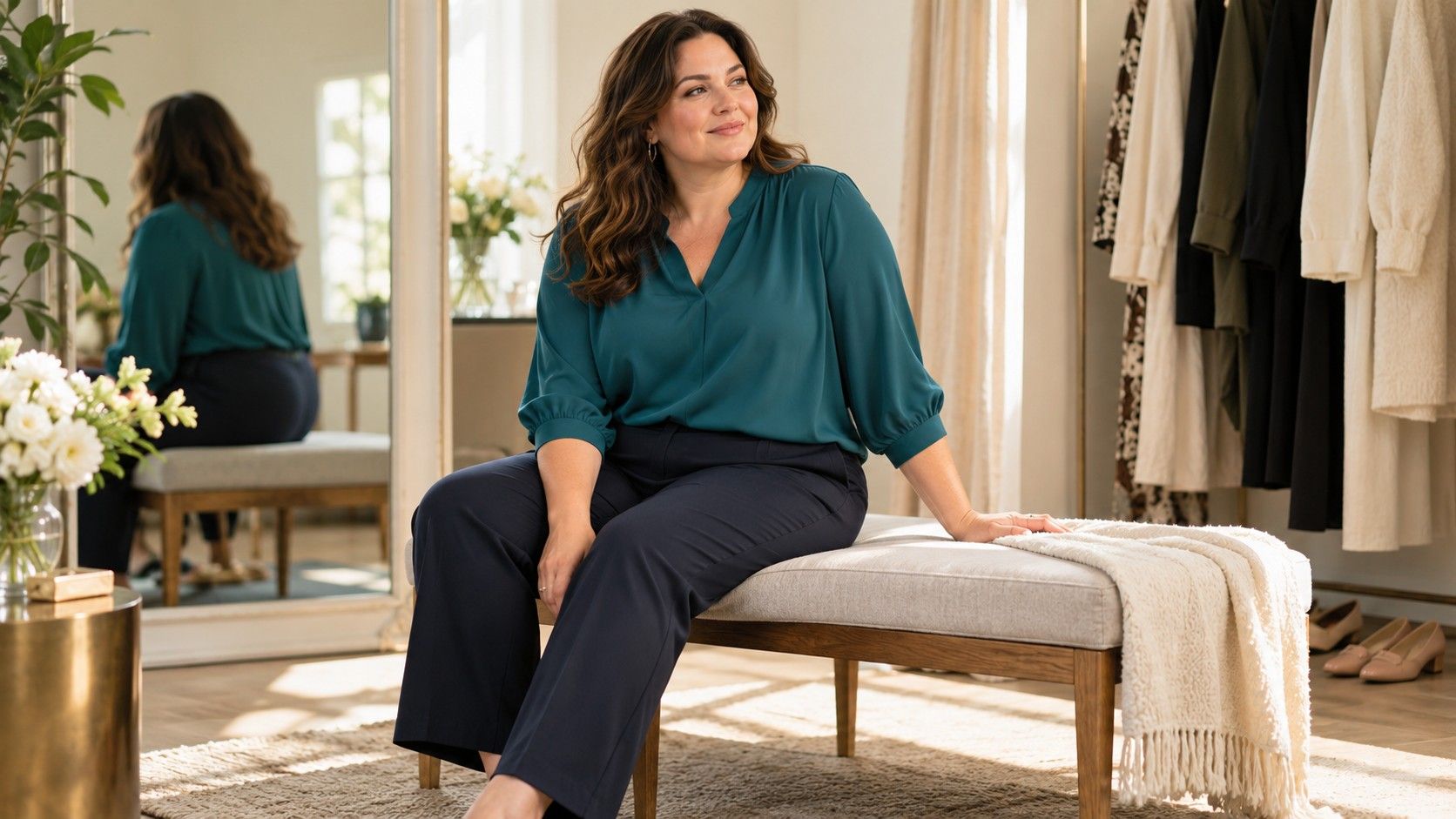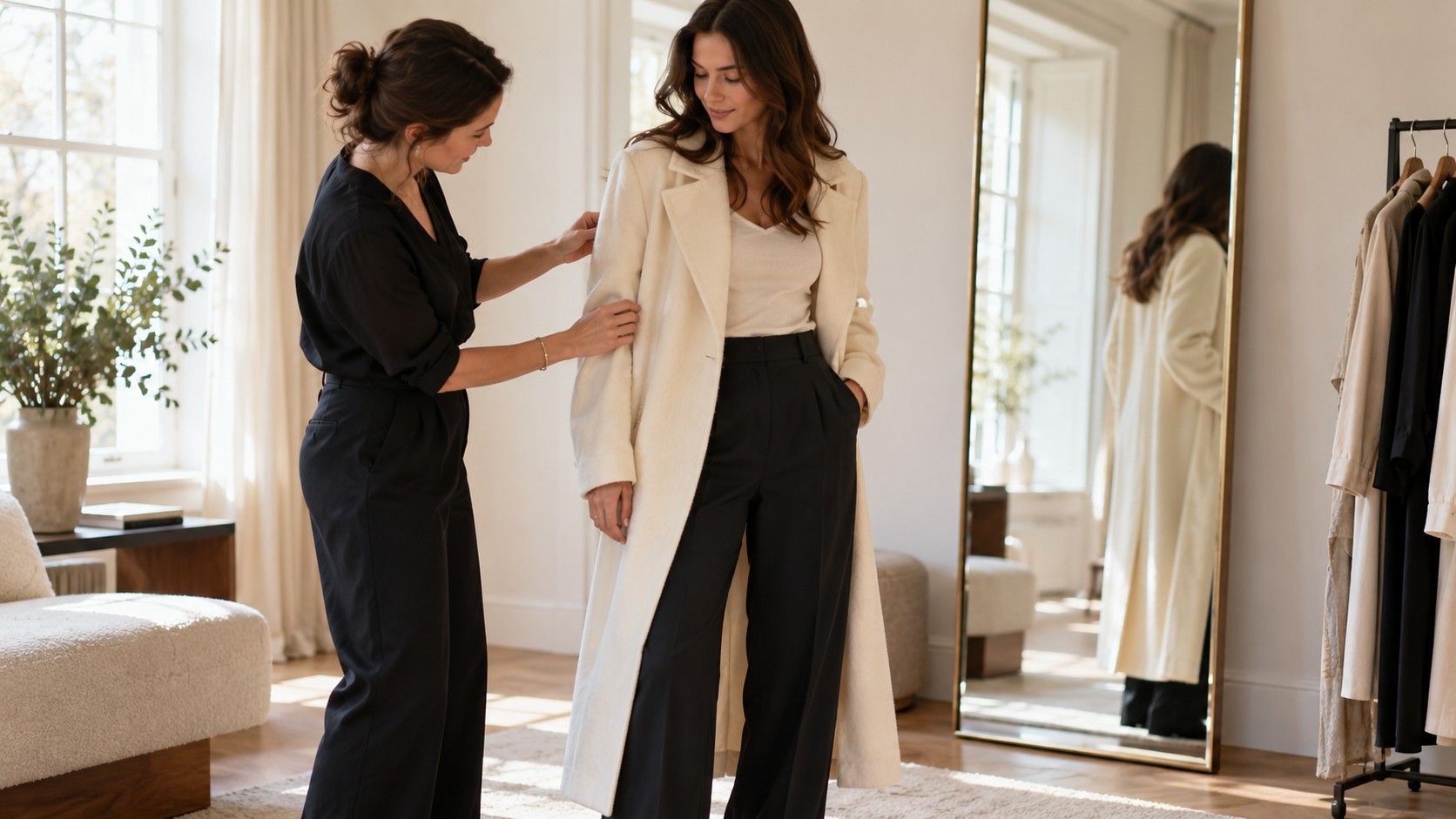
An hourglass result from a measurement calculator does not produce a Kibbe Image Identity. The two approaches ask different questions, even when online advice uses the same words for both. Body shape labels usually compare proportions such as bust, waist and hips. David Kibbe describes an Image Identity System concerned with an overall approach to personal style. I would keep the questions separate: solve the actual fit problem first, then explore an aesthetic framework if it makes choosing outfits more enjoyable.
When two labels seem to contradict each other
Consider someone whose hip and bust measurements are similar and whose waist is smaller. A body shape calculator may call that hourglass. The result tells you little about shoulder fit, the length of the torso or how a particular jacket hangs. It also does not establish an Image Identity. A conversion chart that sends every hourglass figure to one Kibbe category is claiming more than those measurements can support.
This matters when a useful garment gets rejected for the wrong reason. A person might enjoy an unstructured jacket, read that their measurement label demands a fitted waist, and decide the jacket must be wrong. The label has not inspected the outfit. Try it with the intended trousers, shoes and top, and decide whether its shape serves the appearance and activities you want.
Kibbe is a subjective styling framework rather than a scientific or medical classification. Body shape labels are also simplified descriptions, with definitions that vary between tools. You can find practical ideas in either system without treating agreement between them as proof of accuracy. A confident quiz result does not change what a garment does when you wear it.
Choose the question before choosing the system
If jeans fit the hips and gap at the back waist, start with rise, waistband shape and the relationship between the garment waist and seat. Body measurements may help compare a size chart or find a curvier pattern. An Image Identity label cannot tell you which waistband will stay comfortable in a chair. This is a construction and fitting problem that deserves a direct test.
If your clothes fit comfortably but the wardrobe feels visually disconnected, a style framework may be a more relevant experiment. You might compare a continuous outfit line with a more broken-up arrangement, or a softly draped layer with a crisp one. These are aesthetic choices. They do not require you to measure a shoulder angle or assign a permanent identity before trying them.
Sometimes the question is simply whether you like the clothes. A bright printed shirt may make you happier than a technically coordinated neutral outfit. Keep that observation. Personal style includes colour, context, modesty preferences, cultural references and practical needs, all of which can be lost when every choice is reduced to a type.
Watch words that change meaning between conversations
Terms such as curve, width and balance appear in ordinary fitting advice and Kibbe discussions, but their use is not interchangeable. In a fitting room, a tight sleeve may need a larger circumference or a different armhole. That observation does not, by itself, establish a Kibbe accommodation. A garment can be too small on anyone, including someone who does not use that framework at all.
Likewise, being short in stature does not automatically explain every use of petite in style discussions. Retail petite sizing often changes garment lengths and proportions, though the details depend on the brand. Kibbe terminology belongs to its own framework. When advice is unclear, ask what physical garment change is being proposed: a shorter sleeve, a different overall line, extra room, or a particular visual effect.
I would translate a vague comment into something testable before buying. If someone says a jacket overwhelms you, compare shoulder extension, sleeve length, hem position and fabric stiffness. You may prefer the larger silhouette once the sleeves are shortened. Or you may prefer a narrower jacket. Either result gives you more useful information than repeating an ambiguous adjective.
Compare outfits while keeping fit under control
Use clothes that already fit reasonably well for an aesthetic comparison. If one jacket pinches and another is comfortable, you are comparing fit as well as style. Fix or exclude the obvious problem first. Then keep the base outfit constant and change one layer: a soft cardigan, a shaped blazer or a straight overshirt. Notice the overall line and how each option feels in movement.
A photograph can help you remember an outfit, but camera height, distance, lens and posture affect the image. Use the same setup for comparisons and avoid deciding from a close wide-angle selfie. Check the mirror and your comfort as well. An outfit is worn while walking, sitting and carrying things; the photograph records only a moment.
Write descriptions rather than verdicts. The long jacket covers the pocket detail; the shorter one reveals the waistband; the soft knit moves with the skirt. These statements let you decide which effect you like. Calling one outfit correct for a type can end the experiment before you have understood your preference.
Work through a jacket purchase without a conversion chart
Suppose you want a jacket for a desk job and evening travel home. Begin by fitting the shoulders and checking sleeve mobility over your usual shirt. Fasten the jacket, reach forward and sit. If the fronts pull or the collar lifts, compare another cut or size. These checks stay relevant whether your shape calculator says rectangle, pear or hourglass.
Next, compare the appearance. A longer straight jacket may create a continuous outline with matching trousers. A shorter shaped version may divide the outfit at the waist. A soft unlined layer may feel relaxed, while a firmer blazer feels more structured. You can borrow these comparisons from styling discussions without claiming that either jacket confirms your Image Identity.
Finally, consider weather, pockets, laundering and cost. A beautiful pale jacket may be impractical on a rainy commute; a heavy lining may be uncomfortable indoors. If you want to explore Kibbe further, use what you learned as outfit observations, not a diagnosis. Buying a functioning jacket is already a successful outcome.
Keep the useful parts and leave the unresolved label open
A small wardrobe record can hold both kinds of information without mixing them. Record measurements and fit notes where they help with sizing. In a separate sentence, note aesthetic preferences such as a continuous colour line, compact details or a relaxed drape. You do not need to turn those preferences into an official set of rules.
When reading Kibbe vs body shape advice, check whether the writer distinguishes their own interpretation from the creator’s terminology. Be cautious with universal translations, exact calculations and certainty based on isolated body parts. You can read David Kibbe’s own descriptions for the framework’s intended context while keeping independent judgement about what is useful in your life.
An unresolved Image Identity does not prevent you from dressing well. You can choose trousers with a comfortable rise, adjust a sleeve, find colours you enjoy and repeat outfits that work. A system should make those decisions clearer. If the classification work becomes more demanding than getting dressed, return to the specific garment and the day ahead.