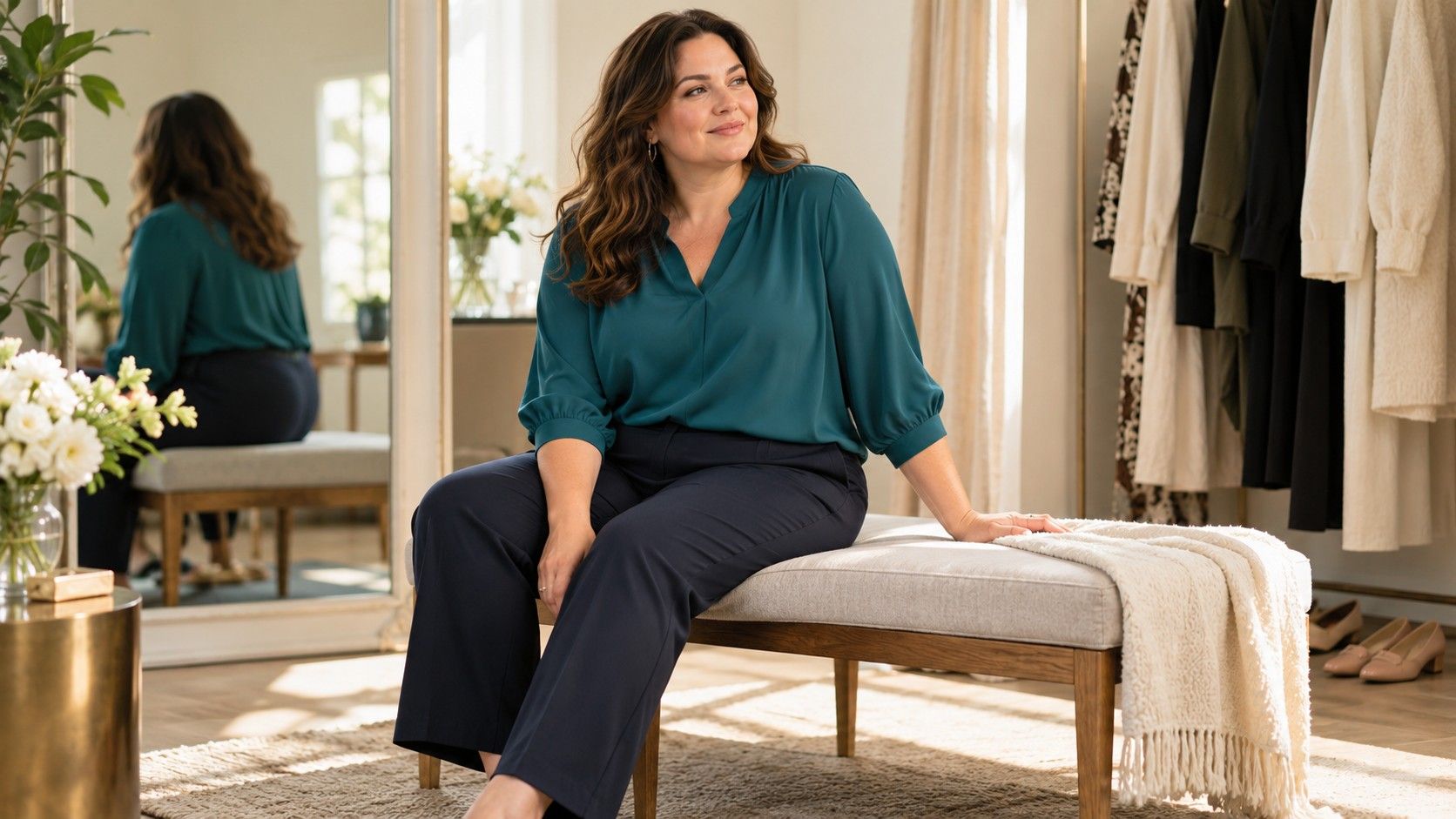
Advice about pear body shape outfits often begins with making the shoulders look wider. That skips the more pressing question when trousers fit your hips but stand away from your waist. Start with the relationship between the garment and your body: room through the seat, a comfortable waistband and enough length to move. Once those work, you can choose a narrow, wide, fitted or loose silhouette because you enjoy it, without treating your hips as a problem to disguise.
Separate a fit problem from the outline you prefer
Pear is a broad fashion description generally used when the hips appear fuller relative to the upper body. It does not specify your height, thigh shape, torso length or bust size. Two people using the same description may need different trouser patterns and enjoy completely different clothes. The label is most useful when it helps you find garments with a suitable waist-to-hip relationship.
Put on a familiar outfit and identify the exact annoyance. Does the waistband gap, do the pockets open, or does the skirt climb when you walk? Those are fit observations. Wanting a shorter jacket, a brighter top or a wider leg is a silhouette preference. Both matter, but they require different experiments. A statement necklace will not solve a waistband that cuts in when you sit.
I would fix the uncomfortable part first. A simple T-shirt and well-fitting jeans are a better starting point than a complicated outfit assembled to satisfy a diagram. You can add volume at the shoulders if that is a look you like; you do not owe anyone a more symmetrical outline.
Try trousers that fit the hips before judging the waist
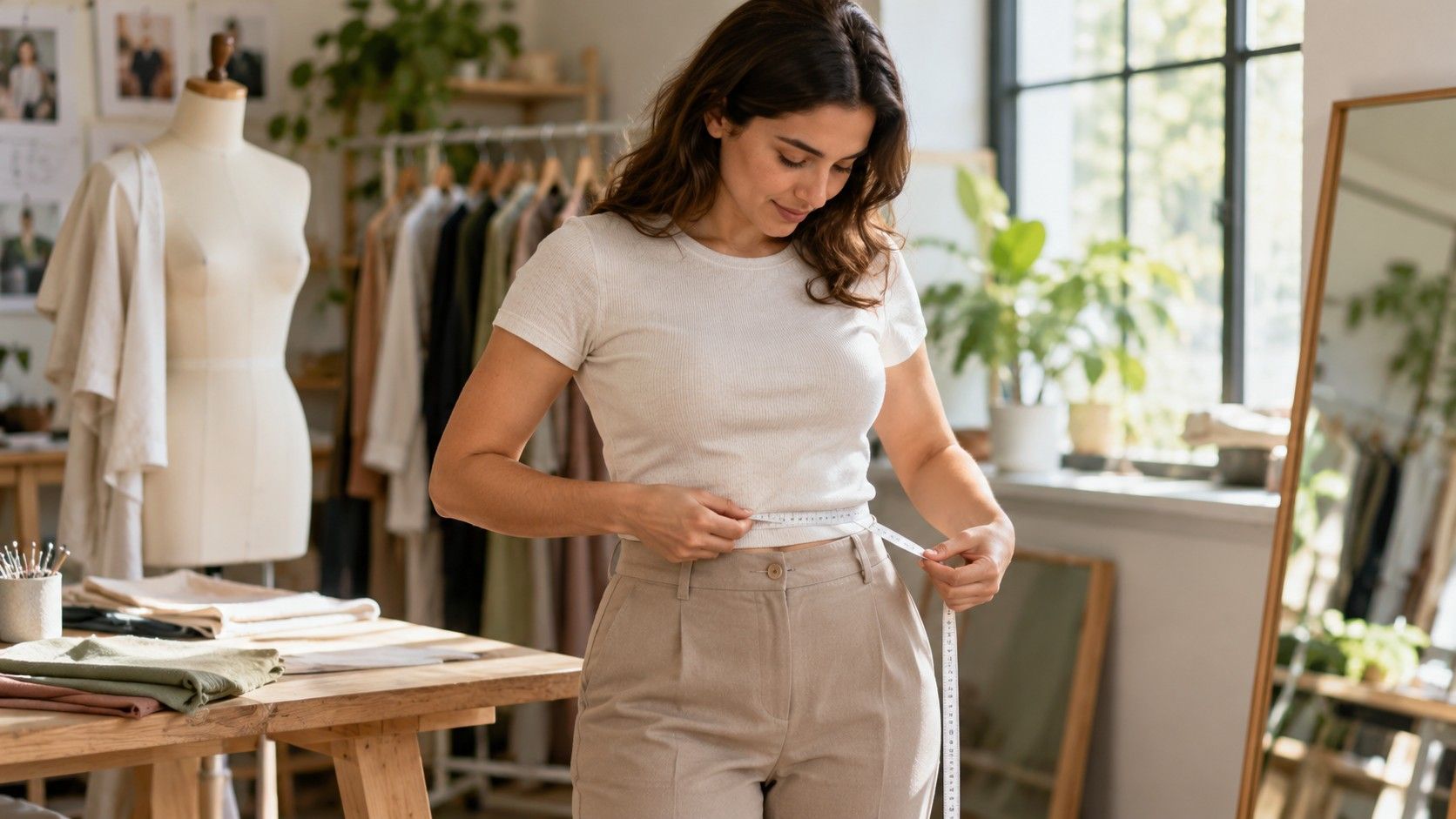
For trousers with little or no stretch, use the full-hip measurement as one starting point in the brand chart, then check the waist and any available garment measurements. If your hips and waist land in different columns, look for another cut rather than assuming one size must work everywhere. Lines described as curvy may offer more hip room relative to the waist, although the term has no consistent meaning across brands.
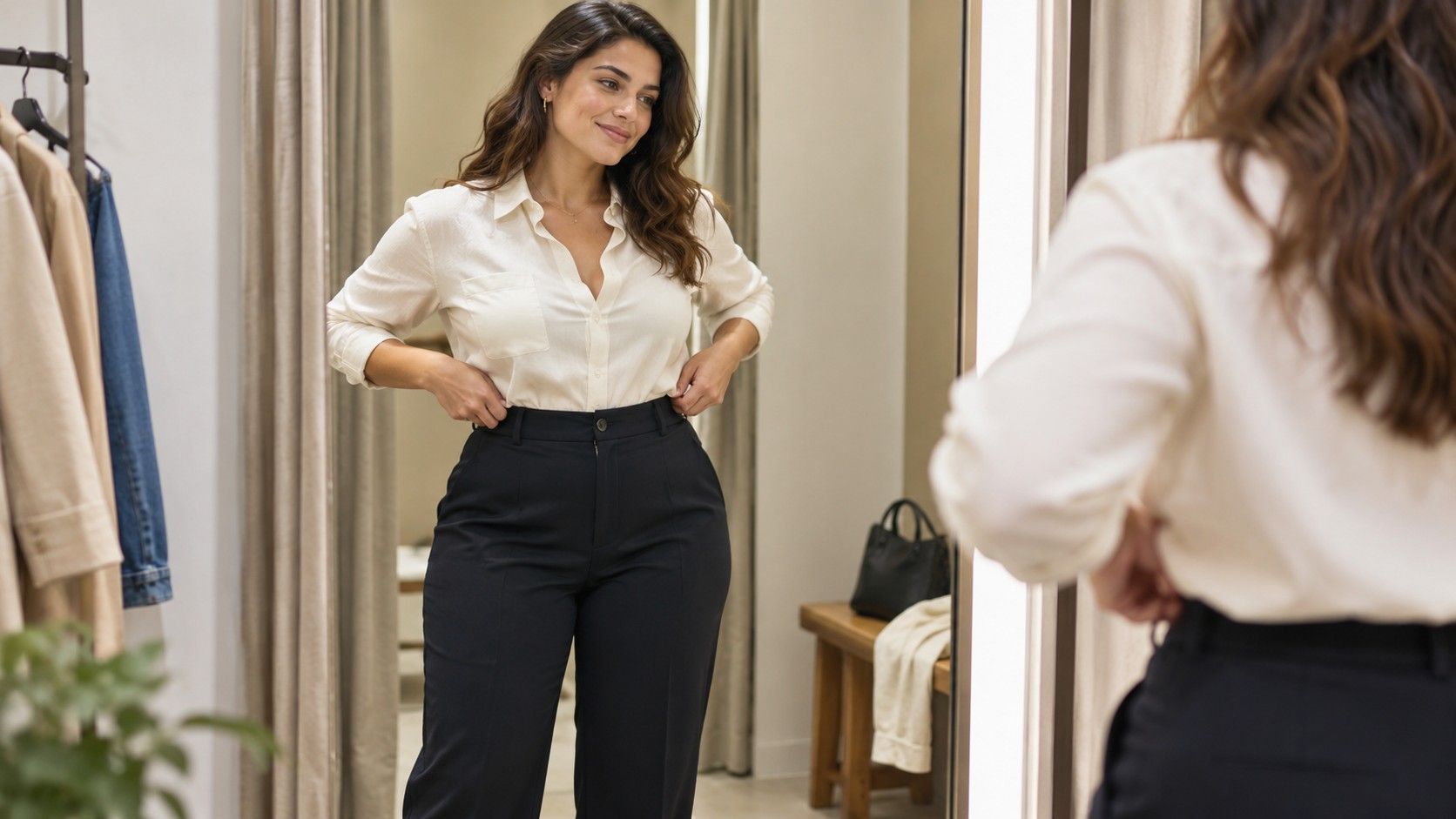
In the fitting room, inspect the seat and front as well as the side view. Fabric should allow the movement intended by the style. A close-fitting jean will behave differently from a tailored wide-leg trouser. Sit down, bend slightly and walk. If the waistband feels fine standing but presses sharply when seated, the purchase still needs reconsidering.
A belt can keep a slightly loose waist in place, but it cannot reliably repair a large mismatch. Pulling hard enough to gather the waistband may create folds under a shirt and move the pockets out of position. A curved waistband or waist alteration can help in some cases. Ask about the construction before buying with tailoring in mind, especially when there are belt loops, decorative seams or pockets near the adjustment.
Check rise and fabric when a promising size still feels wrong
Rise concerns the distance through the crotch area and where the waistband sits; it is not simply a matter of choosing high or low on a style chart. A high-rise pair can fit one person comfortably and feel short or restrictive on another. If the waist is the correct width but the trousers pull down when you sit, compare another rise and cut before blaming the size.
Fabric changes the fit considerably. Stretch denim may feel comfortable in a close cut, but recovery matters: fabric that stretches and stays stretched can become loose at the knees or waist. Rigid denim needs the shape and ease to work without relying on stretch. Soft draping fabric may skim the hips; stiff fabric can hold a deliberate shape away from them. Neither is automatically more suitable.
| What happens | What to compare | What to avoid assuming |
|---|---|---|
| Waist gaps while hips fit | A more curved waistband or different waist-to-hip cut | A tighter belt solves every mismatch |
| Pockets flare open | Hip room, pocket angle and fabric tension | The pocket must be removed |
| Trousers pull when sitting | Rise, seat room and the next size | A high rise always fits better |
| Fabric bags after movement | Fabric recovery and construction | A smaller size is the only answer |
Treat these as comparison prompts, not remote diagnoses. Several causes can produce similar wrinkles. If an item is expensive or an alteration complicated, a tailor looking at the garment on your body can give more useful advice than a shape chart.
Choose skirts and dresses by where the seams land
An A-line skirt offers space below the waist, which can make fitting the hips easier. It is an option, not a uniform. A straight skirt can also work well when it has enough hip room and an appropriate vent or stretch for walking. Check that the waistband stays comfortable seated and that the hem returns to place after a few steps.
With a fitted dress, the upper and lower halves may need different sizes. A dress that fits the hips can be loose at the shoulders or bust; sizing down may introduce tension below. Separates offer an uncomplicated alternative. If you want a one-piece garment, look for styles with adjustable ties, flexible waist shaping or a cut that allows the room you need.
Watch the waist seam rather than just the model photograph. A seam positioned above your preferred waist may change the whole outline and make the bodice feel short. A wrap dress allows some adjustment, but check coverage while sitting and moving; the overlap must work in your actual size. Try it with the underlayer you intend to wear, especially if the neckline shifts.
Build two outfits around the same comfortable bottom half
Begin with trousers that already pass the sitting and walking tests. For a clean everyday outfit, add a knit top that finishes where you like it and shoes suited to the hem length. Try the top loose, partly tucked and fully tucked. The waist need not be visible in every version. Choose the one that stays comfortable and feels intentional when you move.
For a more defined outline, try a shorter jacket over the same trousers. A jacket ending near the waist will read differently from one extending over the hips, but neither hem position is forbidden. Check the back view for bunching where the jacket meets the trouser waistband. If the top underneath is bulky, change that layer before deciding the jacket length is wrong.
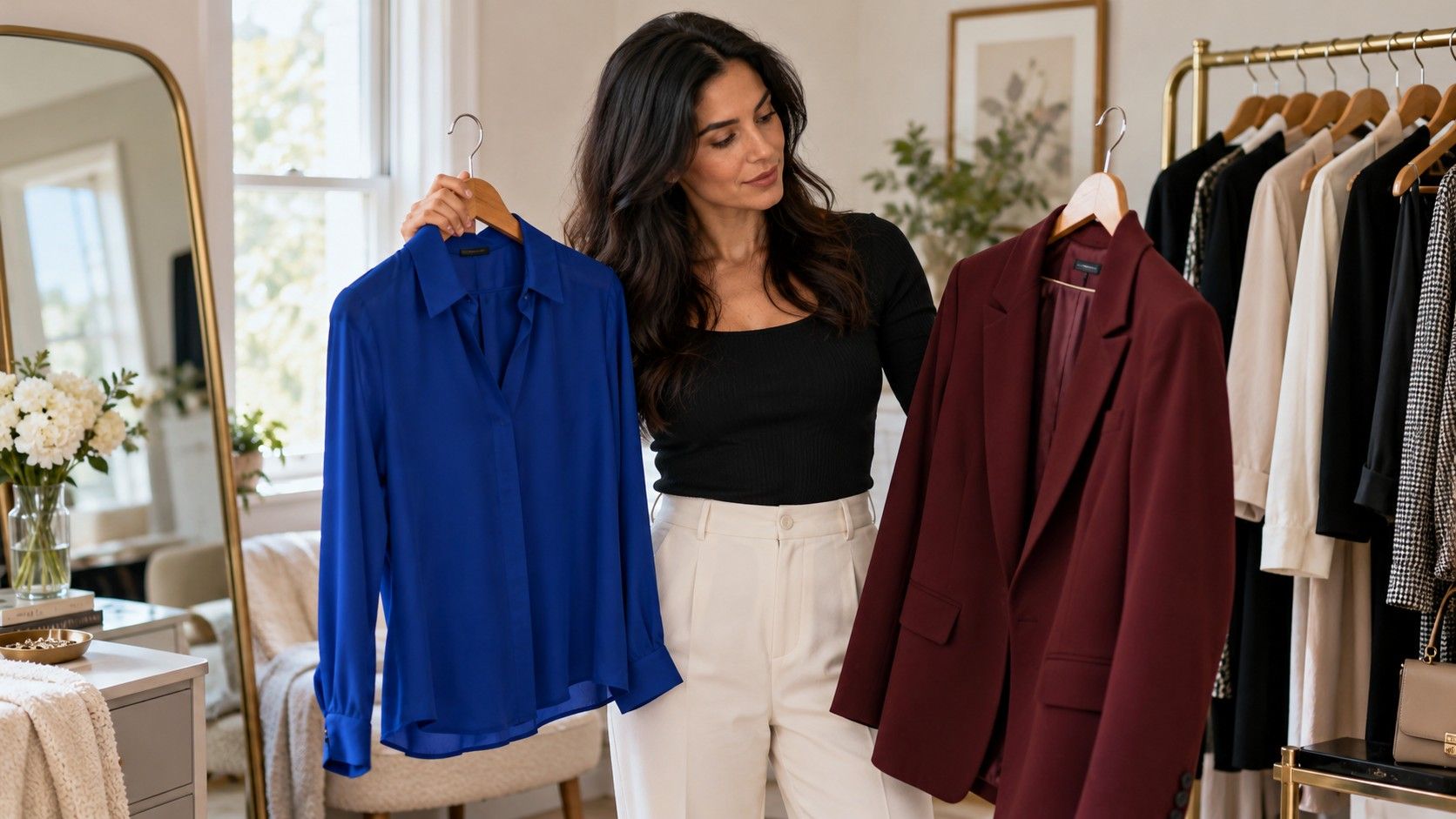
You can use colour and detail to direct attention if you want to. A bright shirt, textured collar or broad neckline can make the upper half more prominent; equally, a patterned skirt can celebrate the lower half. “Balance” describes an optional visual effect. It is not a requirement that every outfit must fulfil.
Finish the test with the bag and coat you normally use. A crossbody strap may pull a soft top to one side, and a long coat can change the silhouette you carefully built indoors. An outfit has to survive the actual day, including sitting on public transport or carrying a work bag, rather than only looking tidy in one mirror pose.
Save fit clues instead of a list of forbidden clothes
When a garment works, note the brand, size, fabric, rise and whether the waistband is straight or curved. Add a quick photograph of the label if useful. These details make future shopping easier, particularly when a brand offers several cuts with similar names. Keep the receipt until you have tried the item with enough of your wardrobe to judge it.
A disappointing pair deserves a specific note too: “seat comfortable, waistband loose,” or “rise restricts sitting.” Avoid turning one failed pattern into a rule against all straight trousers or all fitted skirts. The next version may have different seams, fabric and proportions. A style category covers a surprisingly wide range of construction.
Pear shape outfits become easier when the lower half fits without constant adjustment and the rest reflects your taste. You can wear shoulder detail, quiet knitwear, slim trousers or a broad skirt. Let the garment supply the room and shape you want, and let your body remain the body it is.