Rectangle body shape outfits do not have to manufacture a waist. If your bust, waist and hips have a relatively straight relationship, you can enjoy a clean line, a loose layer or a clearly shaped silhouette. The useful question is what you want the clothes to do and whether they stay comfortable through an ordinary day. A belt is one option; fabric, seams, hem lengths and ease offer several others, often with less adjusting in front of the mirror.
Choose the outline before choosing the styling trick
Rectangle is a broad fashion description, not a complete account of a body. It does not tell you how long your torso is, where your preferred waistband sits or how much room you need through the seat. Some people who use the description have a clear waist indentation from one angle and a straighter outline from another. You do not need to settle that argument before getting dressed.
Start with a visible goal. A straight shirt over straight trousers gives one continuous outline. A shorter top and a fuller skirt create a more distinct division. A shaped jacket can bring in the waist through its seams without a belt. None of these is inherently more flattering; they serve different tastes, settings and practical needs.
I would compare two versions using clothes you already own. Keep the trousers the same and change only the top length, or keep the dress and add a layer. When several elements change at once, it becomes difficult to know what made the outfit work. A small experiment gives clearer information than a shopping list of “must-have” pieces.
Check whether the waistband matches where you wear it
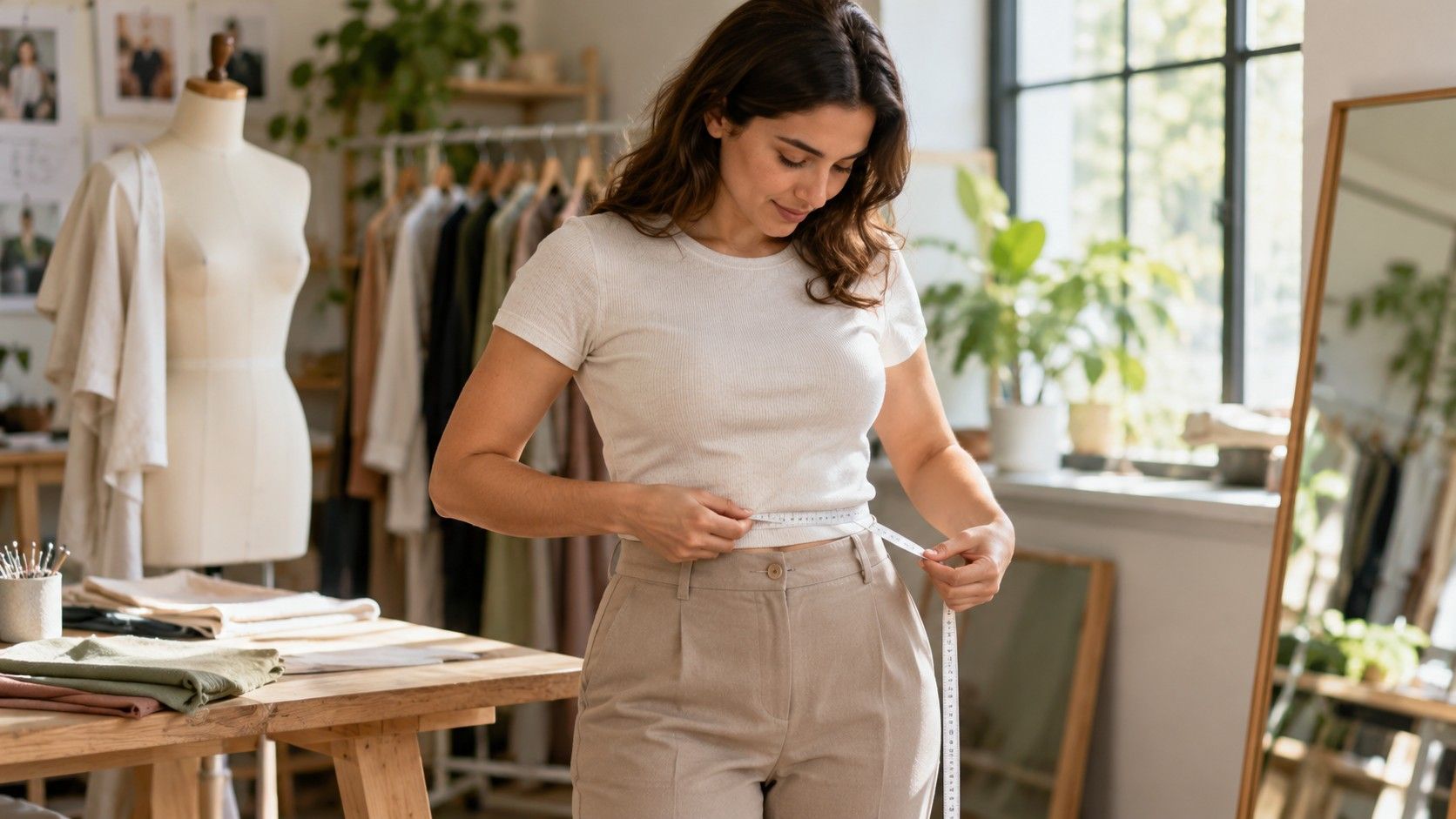
A waistband designed with a strong curve may feel tight in one area and loose in another if its shaping differs from yours. A straighter waistband may work better, but the rise and the garment’s intended position also matter. Compare the brand chart and try different cuts. The word rectangle cannot choose a size for you.
Try trousers while standing, seated and walking. If the waist fits but the hips have more fabric than you want, a different pattern may help more than a smaller size. If the hip area fits but the waistband presses, sizing down is unlikely to improve comfort. Keep the fit observations separate: waist pressure, seat room, rise and leg width are different variables.
An elastic or partly elastic waist can offer flexibility, though it is not automatically comfortable. Check the tension and whether the elastic twists or rolls during movement. A drawstring lets you adjust the opening but may produce gathers you do not like under a thin top. The best construction is the one that works with the outfit and your day.
For a fitted skirt, check that it stays in place when you walk and sit. A waistband that is comfortable at one height may feel awkward if the skirt repeatedly migrates to another. Choosing a different rise or a less fitted style can be easier than trying to anchor the garment with a tight belt.
Use fabric and seams when you want more shape
Fabric determines how much of its own outline a garment holds. Crisp cotton can create volume away from the body; a soft knit may fall closer; a heavier draping fabric can give a longer, smoother line. These are tendencies rather than promises, because weight, weave, lining and cut interact. Handle the garment and try it on instead of selecting by fibre name alone.
Darts, princess seams and curved side seams can shape a top or jacket. Check where that shaping lands on you. A jacket’s narrowest point may sit above or below your preferred waist, changing both comfort and appearance. If the garment looks wrong despite the right circumference, length and seam position may explain more than the body-shape label.
| Wanted effect | Try first | Check before buying |
|---|---|---|
| A clean, straight line | Similar widths and a smooth layer | Enough ease to sit and reach |
| A more defined waist | Shaped seams or a gentle tuck | Waist shaping lands at a comfortable height |
| More volume | Pleats, gathers or a wider leg | Fabric moves as intended |
| A relaxed outline | Loose shirt or unstructured dress | Neckline and sleeves remain comfortable |
A silhouette can be shaped without being tight. A softly fitted jacket over relaxed trousers may show a waist through the cut while leaving room for movement. Equally, a loose dress can have a deliberate outline through its sleeve shape and hem. “Defined” and “comfortable” are not opposing choices.
Add a belt only if it improves the whole outfit
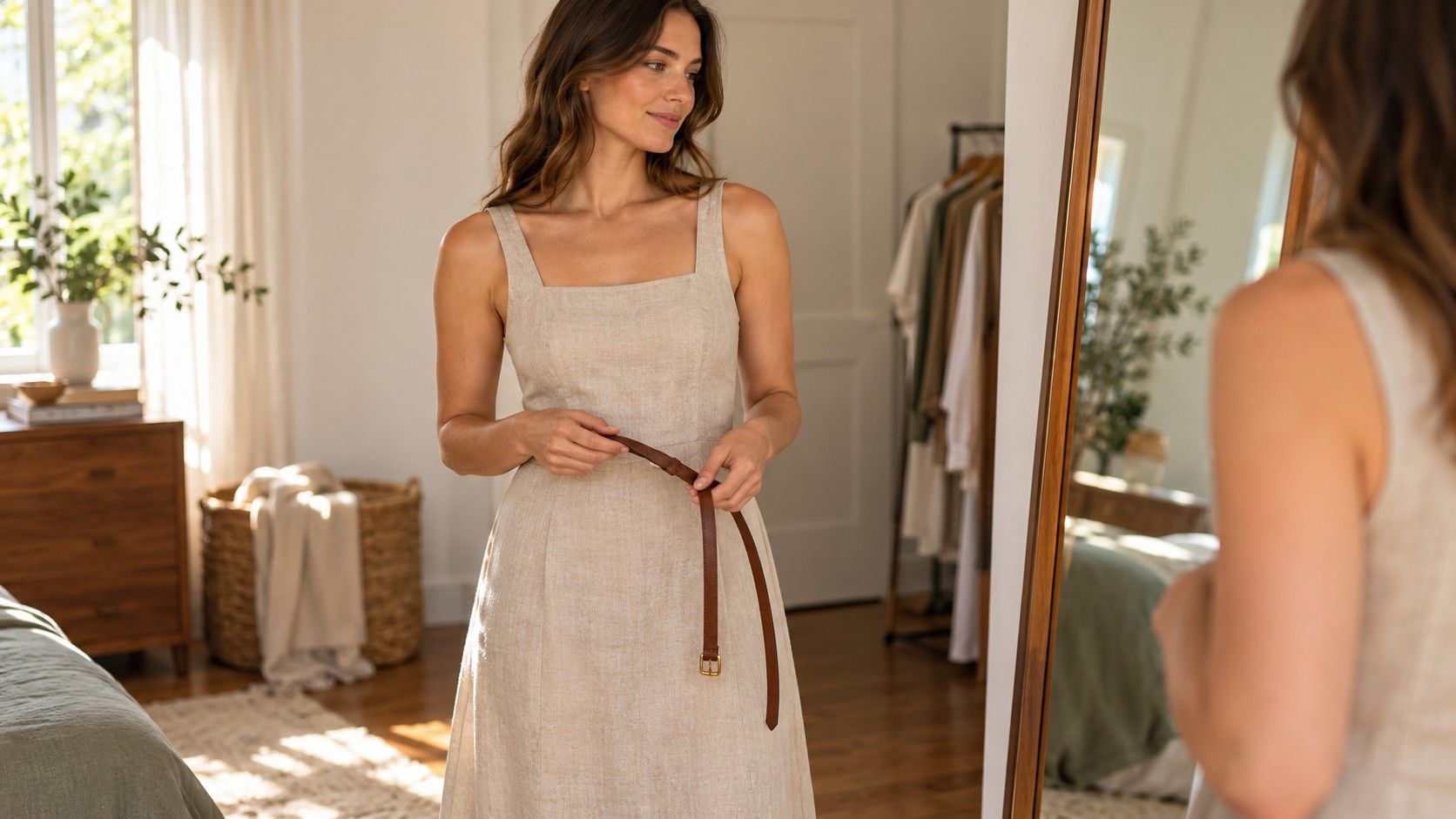
A belt changes where fabric gathers and where the eye pauses. On a dress with enough length and room, it can create an outline you enjoy. On a short or close-fitting dress, tightening the waist may pull the hem upwards, shift the shoulders or create unwanted blousing. Check the garment after walking and sitting, not just after arranging it.
Try a gentle tuck before buying an accessory. A full tuck gives a clear waistband edge, while a partial tuck introduces a different line and leaves more fabric loose. Neither is universally better for a rectangle shape. Look at the side and back to see where fabric accumulates, especially under a jacket.
Belt width, stiffness and buckle size affect comfort as much as appearance. A broad rigid belt may feel awkward while seated; a narrow soft belt can shift around on slippery fabric. If you prefer the unbelted version, keep it. Waist definition is a styling choice, not a test your outfit must pass.
Colour placement offers another option. A top and bottom in similar tones can create continuity, while a contrast at the waistband makes the division clearer. Try that with pieces you already own. There is no reason to replace a comfortable belt-free dress just because a shape guide prefers an hourglass outline.
Build a work outfit and a relaxed version from one pair of trousers
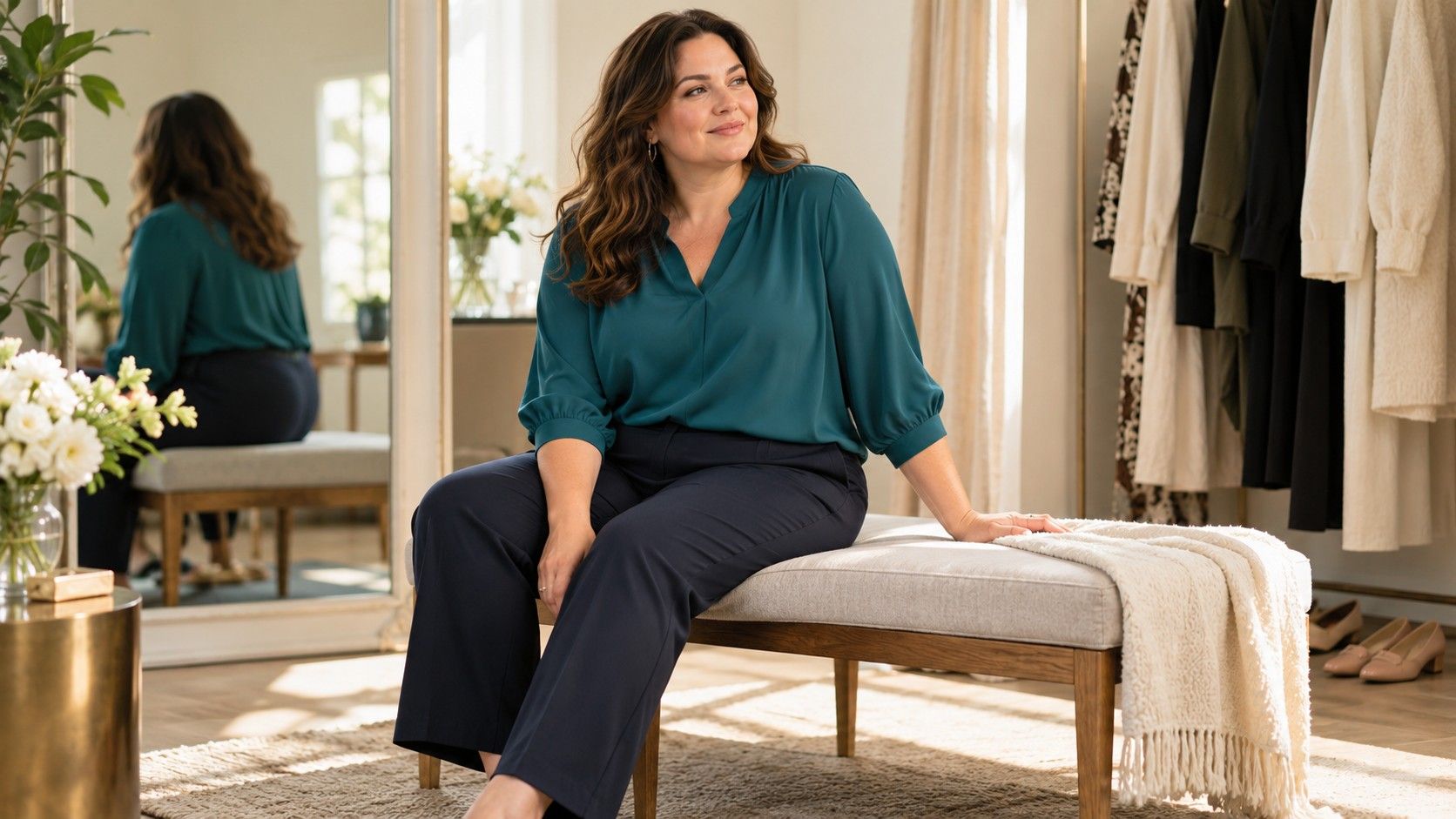
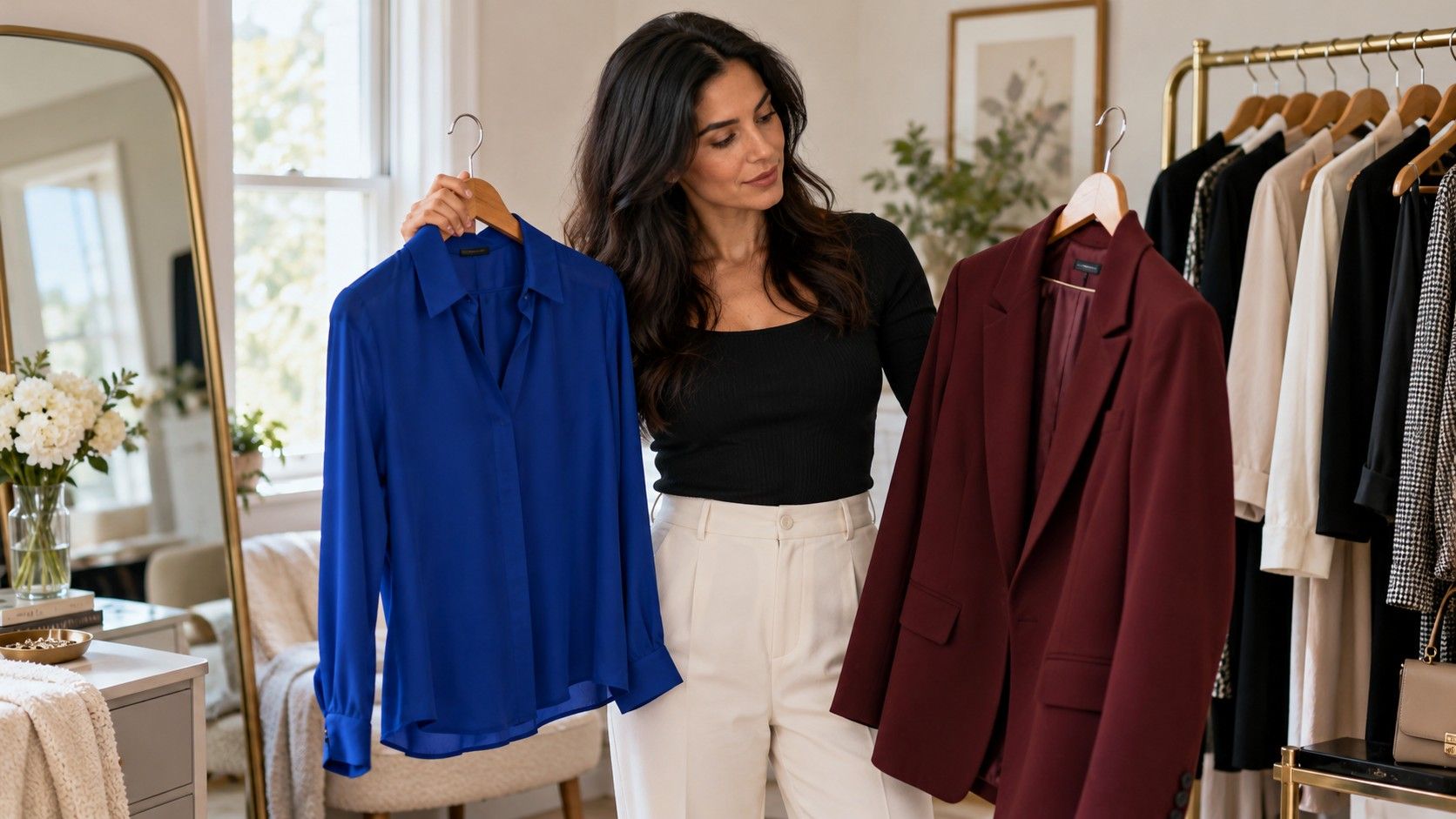
Start with trousers whose waistband and rise already feel comfortable. For a work outfit, try a shirt with a hem long enough to tuck without pulling out every time you reach. Add a jacket whose waist shaping, if any, lands where you want it. Check the layers together: a shirt that works alone can bunch under a closer-fitting jacket.
For a relaxed version, wear the same trousers with an untucked knit or a shorter boxy top. Compare the top’s hem with the waistband rather than automatically choosing a cropped length. A small difference can change how the outfit is divided, particularly when the trousers have a higher rise. The goal is an outline you like with coverage you find comfortable.
Try the actual shoes before judging the trouser length. A wide leg may need a different hem treatment with a low shoe than with a thicker sole. You should be able to walk without catching the fabric. Check the coat as well: its length and volume become part of the outfit whenever you leave the building.
If you want a dress alternative, compare a straight-cut dress with a softly shaped one in similar fabric. Keep the footwear consistent. Notice whether you prefer the uninterrupted line or the more visible waist, and whether either version makes sitting or reaching awkward. That comparison offers useful direction without declaring one style correct for your body.
Keep the details that make getting dressed easier
Save practical notes when something works: waistband height, torso length, fabric weight, sleeve room and the top length you liked with it. These clues are more useful than a list banning straight dresses or oversized shirts. A broad style name can include many different cuts, and one disappointing garment cannot speak for all of them.
When shopping online, compare garment measurements with something similar that fits. Check whether a chart gives body dimensions or finished clothing dimensions. A relaxed top needs different ease from a fitted knit, so numbers alone need the context of fabric and intended fit. Read the return conditions before treating a speculative purchase as a fit experiment.
Your preferences can also change with the day. You may want a sharply shaped jacket for one occasion and a generous shirt for another. Rectangle body shape advice becomes useful when it offers techniques you can select, rather than a permanent assignment to create curves. Keep the line you enjoy, allow the room you need and let the rest of the outfit serve your actual plans.