Two white shirts can fit equally well and still say very different things. One has a crisp collar and concealed buttons; the other has embroidery and a rounded neckline. Style essences offer a vocabulary for that difference in visual character. I find the idea most useful when it helps explain a clothing choice, and least useful when it turns a face into a list of supposed personality traits. You can explore the details without needing a definitive label.
Start with the shirt that fits but never gets worn
Choose one garment that is physically comfortable yet feels wrong for the occasions you bought it for. Perhaps a frilled blouse works under your jacket but feels too decorative in your office. Perhaps a severe black bag feels at odds with the relaxed clothes you wear every weekend. The mismatch gives you a specific question about visual detail, rather than a vague request to discover who you are.
John Kitchener is associated with a style essence approach using seven named essences: Dramatic, Natural, Classic, Gamine, Romantic, Ingenue and Angelic. Other writers change terminology or combine ideas from different systems. When reading advice, identify whose framework is being discussed. Similar words across a blog, a consultant and a Kibbe discussion may describe different concepts.
These categories are subjective styling interpretations. They do not establish personality, character, gender, maturity or worth. “Romantic” describes an aesthetic vocabulary here, not someone's relationships; “Natural” does not mean more authentic. Keep the labels attached to styling experiments, and you avoid asking clothes to prove something they cannot prove.
Read the details before assigning yourself a category
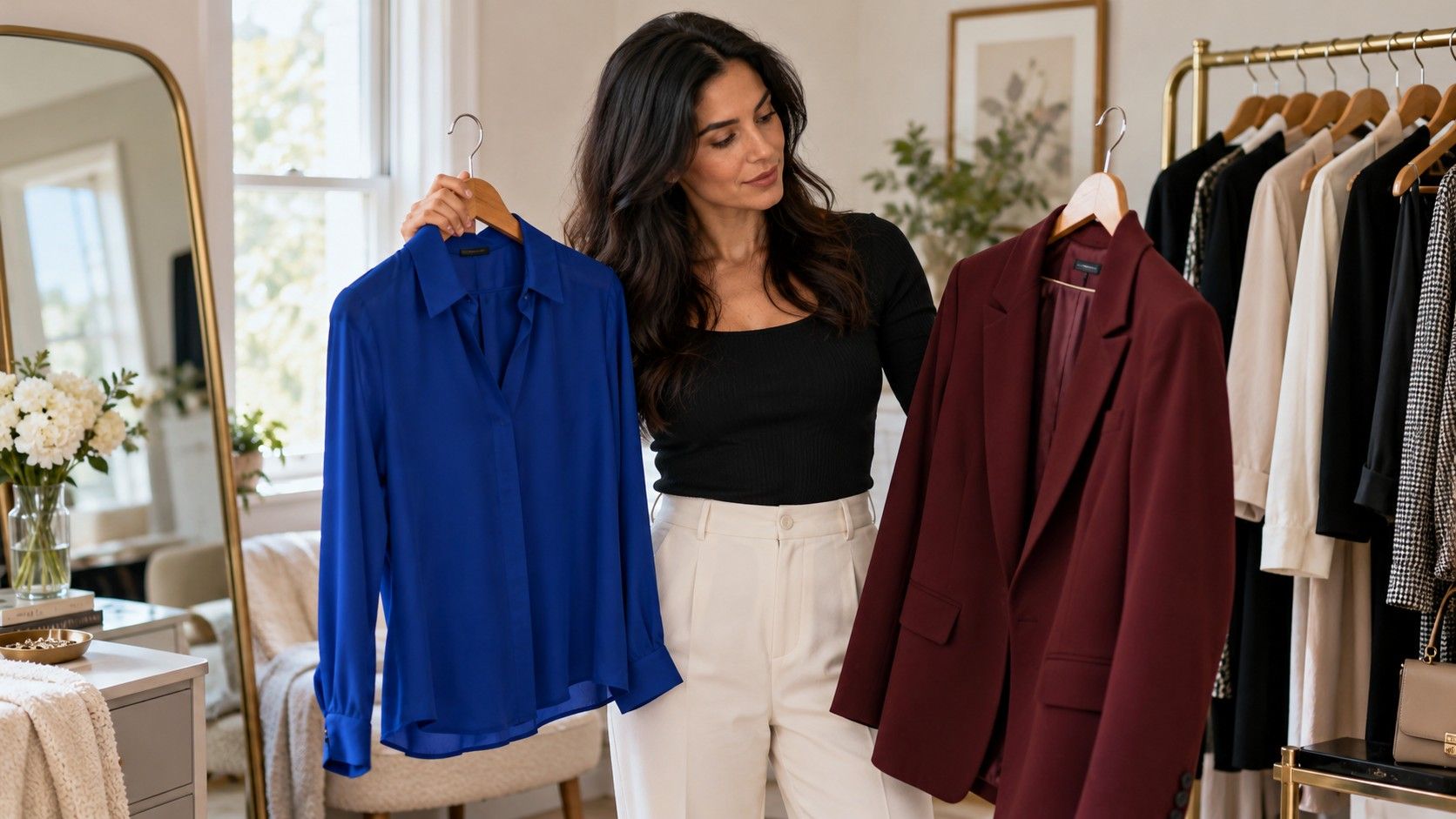
Look at a garment on a hanger and describe what is actually present. A high-contrast stripe, angular lapel and oversized buckle create a different impression from a small floral print, rounded collar and tiny buttons. Start with scale, line, texture and ornament. These are visible features you can compare without making a claim about the person wearing them.
In common essence discussions, Dramatic suggests bold or elongated detail; Natural often suggests relaxed textures and ease; Classic points toward restraint and moderation. Gamine is frequently illustrated through compact, playful contrasts. Romantic examples emphasize rounded, lush detail, while Ingenue examples use small, delicate motifs. Angelic, also called Ethereal in some discussions, often appears through elongated, airy effects. These are broad examples rather than universal garment assignments.
An item rarely speaks in one pure language. A restrained jacket might have a large sculptural button, and a fluid dress might use a crisp geometric print. Instead of sorting the item permanently, circle the detail that matters most to you. A scarf can look busy because of its small repeated pattern even if its fabric is soft and its color is quiet.
Try the idea near your face without making a face diagnosis
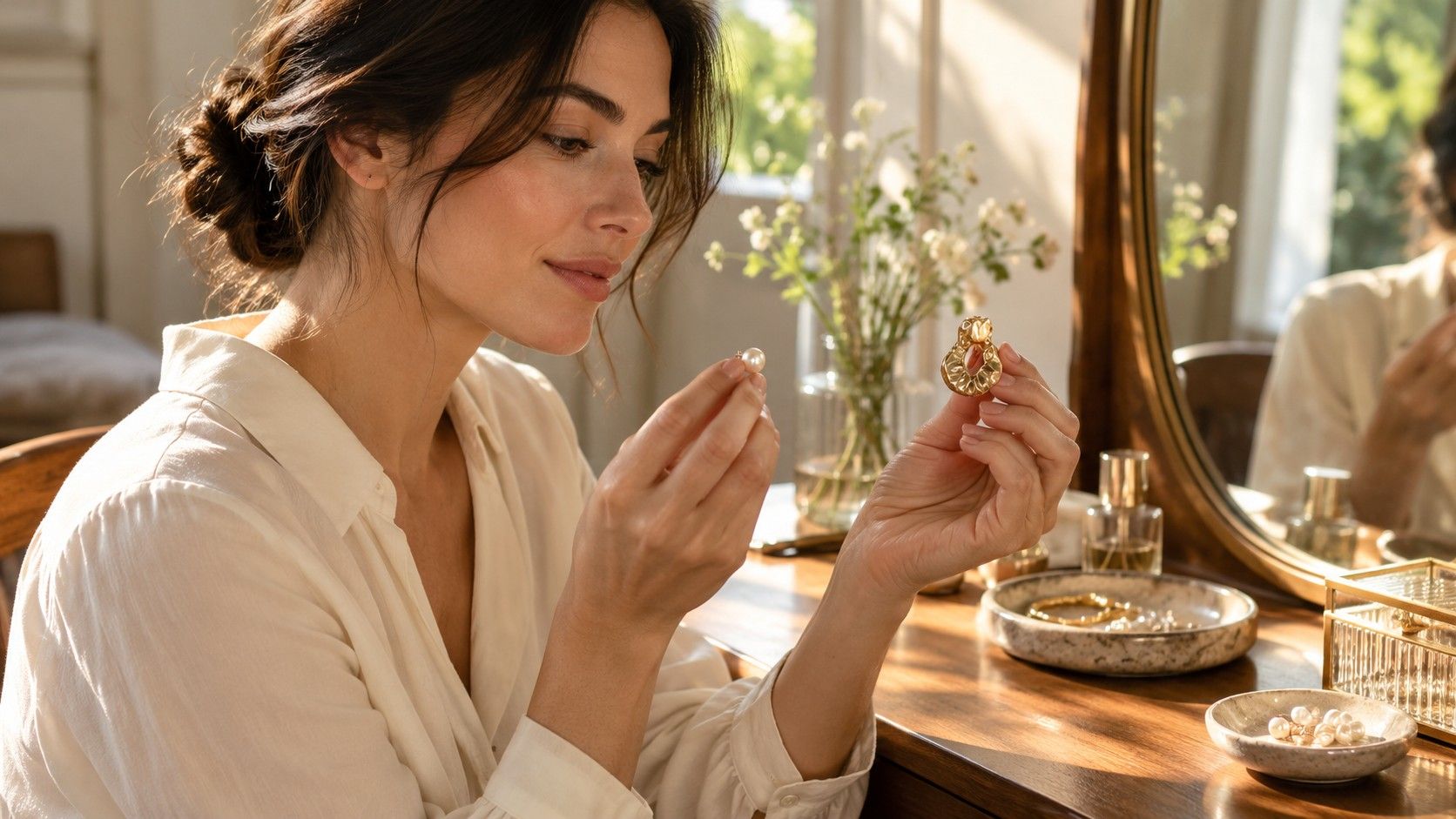
Accessories provide a manageable starting point. Wear your usual plain top and compare a small rounded earring with a longer angular pair. Keep your hairstyle and lighting similar. Look at the relationship between the accessory, neckline and overall outfit. You are deciding which presentation you prefer, rather than measuring a biological essence.
Scale can matter as much as category. If a tiny pendant disappears under your collar, first move it to a clearer neckline. If a large earring overwhelms a delicate print, try the same earring with a plain top. Otherwise you may blame your features for a conflict between two pieces of clothing. Change one variable, pause, and then judge the result again.
Photographs help remember an experiment, but wide-angle selfies distort proportions and expressions vary. Stand at a consistent distance and avoid building conclusions from one especially good or bad image. A mirror, a short video and an ordinary day of wear can reveal different practical details. None of them produces an objective essence certificate.
Keep body measurements and Kibbe ideas in separate drawers
A measurement-based body shape compares circumferences or proportions for a particular purpose. It can help explain why a waistband gaps or why you choose different sizes for tops and bottoms. It does not tell you whether you will enjoy playful buttons, substantial jewelry or a restrained handbag. Those are different decisions.
Kibbe image identities belong to another styling framework with their own concepts. Sharing a word such as Natural or Dramatic does not make an essence label interchangeable with a Kibbe identity. Avoid a chain of reasoning that starts with broad shoulders and ends with a mandatory jewelry style. A shoulder measurement cannot settle either a complete Kibbe interpretation or an essence blend.
Color analysis asks yet another question about color relationships. A cool-looking blue can be printed with small flowers or large angular shapes. The palette does not choose the motif for you. Separating fit, silhouette, color and detail is slightly slower at first, but it makes a disappointing outfit much easier to repair.
Build a quiet experiment for an ordinary working day
Use a familiar base such as trousers, a plain top and comfortable shoes. For a restrained version, add a simple belt and a bag with little visible hardware. For a more playful version, change to a contrasting collar or a small patterned scarf. For a more relaxed version, test a textured overshirt. These are examples of changing visual character without replacing the entire wardrobe.
Watch how the detail behaves over several hours. A scarf may look good standing still and fall into your lunch. A chunky necklace may hit the desk when you lean forward. A fine bracelet may catch on your knit. Those observations belong in the decision alongside appearance. There is little value in an expressive accessory you have to remove every time you work.
You may like one version for meetings and another for weekends. That does not demonstrate an inconsistent essence. Clothing also communicates occasion, mood and personal taste. A useful framework leaves room for those changes. I would keep the combination that makes getting dressed easier and treat the discarded version as information about that outfit.
Know when to stop collecting opinions
Online feedback often arrives as a confident percentage split from strangers looking at a few photos. Without a clear method, those numbers should not be mistaken for measurements. Even a professional assessment remains a styling interpretation. If you seek a consultation, read what is actually included and whether you can see garment examples before paying.
Stop the experiment when you have usable observations: larger earrings work with your plain winter knit; rounded collars feel too fussy beside your work jacket; texture makes a basic weekend outfit more interesting. That is enough to improve shopping decisions. You do not need consensus about the shape of your eyes before choosing a coat.
Keep a small folder of outfits you genuinely wear and add a sentence about each. Describe the feature you want to repeat rather than assigning every item an essence. Over time, the recurring choices may suggest a vocabulary you enjoy. If the vocabulary becomes restrictive, keep the clothes and loosen the labels.