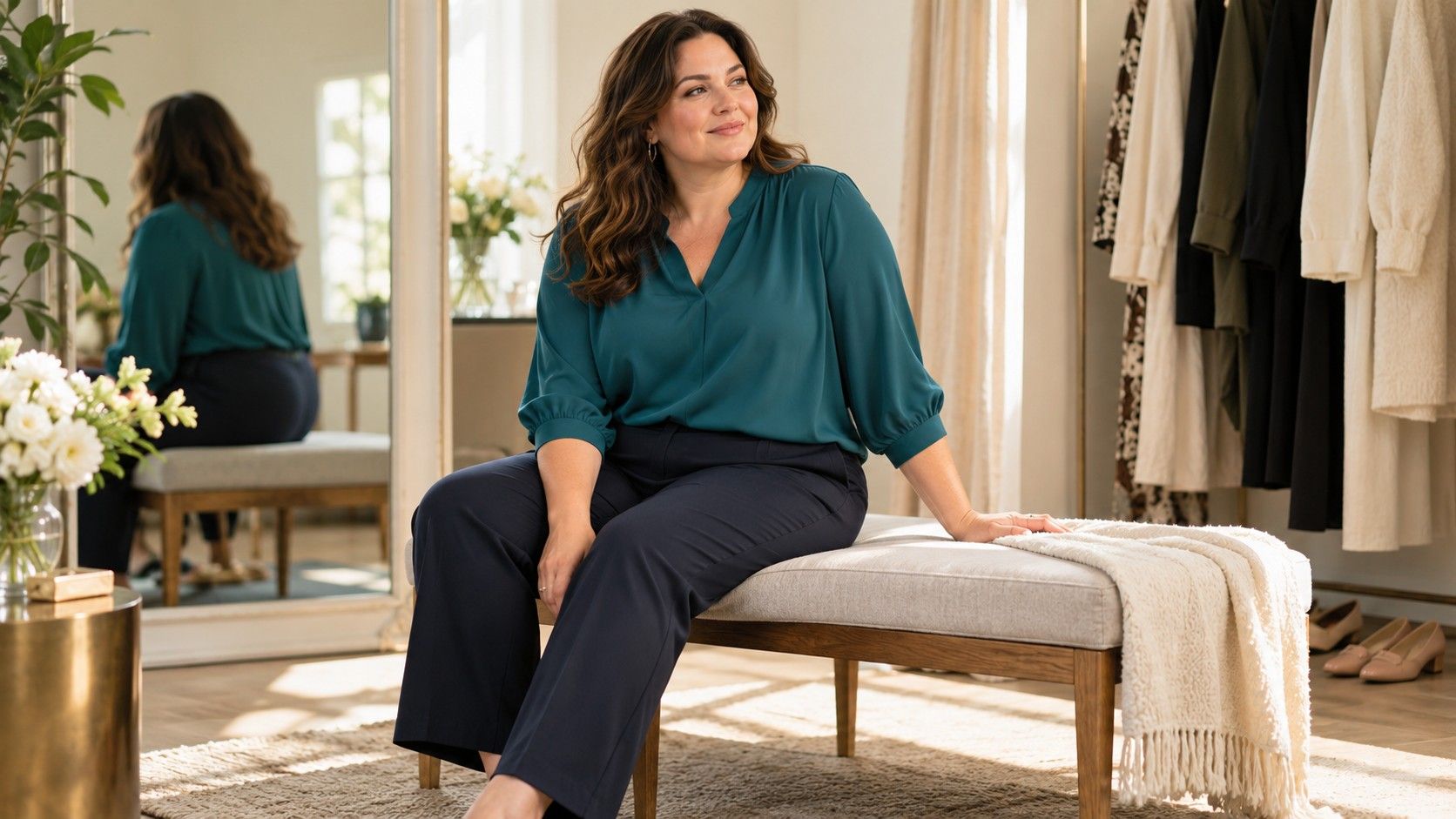
An evening spent comparing body shape charts, Kibbe discussions and style essence boards can end with less certainty than you had at the beginning. Meanwhile, you still need something to wear to work. A useful wardrobe does not depend on settling every classification. I would work backward from the clothes you need this week, using a system only when it helps answer a particular question about fit, silhouette, color or detail.
Begin with the week that is actually on your calendar
List the situations you dress for: a desk day, a school run, a long walk, a client meeting or dinner with friends. Include weather and laundry. Three washable outfits that work with your coat may matter more than an elegant occasion dress, even if the dress features prominently on your inspiration board. Your time and routine provide the first constraints.
Look at what you wore repeatedly during the last few ordinary weeks. Notice the shoes, layers and fabrics you reached for. A cardigan may be doing more work than every blazer you own because your workplace is cold and you carry a laptop bag. That is useful information about your wardrobe, not evidence that you have failed to dress for an identity.
Choose one recurring frustration to solve. Perhaps your tops do not work under jackets, your trousers need constant adjustment or every evening outfit requires uncomfortable shoes. Keep the task small enough to test with existing clothes. The more clearly you name the problem, the less likely you are to buy an entire new aesthetic in response.
Give each framework a limited job
Measurement-based body shape language can describe relative proportions, which may help you start a search for a different cut. It cannot determine your complete style, health or personal character. Garment measurements and movement tests remain necessary. Two people using the same shape word can require different rises, sleeve cuts and lengths.
Kibbe offers an image identity framework with its own vocabulary. Style essences discuss visual character and detail in another interpretive approach. They are not interchangeable, even when they share words such as Dramatic or Natural. A quiz result from one framework should not be used as evidence for a category in another.
Color systems address color relationships, again through subjective styling interpretation. They do not prescribe your body silhouette. Keep four practical questions apart: does it fit, do I like the silhouette, does the color work in the outfit, and do the details suit my intention? You can answer these without obtaining agreement on a permanent label.
Build three complete outfits before making a shopping list
Choose one outfit for your most frequent weekday situation. Put it on with shoes and outerwear, then sit, walk and reach. If the sleeve bunches inside the coat, try a thinner layer. If the trouser hem catches on the shoe, test another shoe or a temporary fold. Solve the visible problem before looking for a theoretical explanation.
Build a second outfit for a different level of formality and a third for a relaxed day. Reuse pieces when they work. A plain knit might serve all three outfits with different trousers and accessories. Photograph the combinations or write a short description so you can repeat them without another lengthy session in front of the mirror.
Pay attention to the transitions between items. A good shirt and a good skirt can still create an awkward tuck together. A bag strap can interrupt the neckline you liked. These are relationships between garments, which is why evaluating every item in isolation gives an incomplete picture of the wardrobe.
Separate a fit failure from an unfamiliar look
A fit failure has observable consequences: pulling, slipping, restricted movement, unwanted exposure or pressure when seated. An unfamiliar look may be comfortable yet feel strange because it differs from your usual clothes. Give the second kind of change a little time, while addressing the first with another cut, size or alteration.
Try an unfamiliar silhouette on a low-pressure day at home or on a short errand. Use your regular shoes and a familiar layer so the entire outfit is not new at once. After a few hours, decide whether you liked wearing it. You are allowed to prefer your old silhouette even if a style chart recommends the new one.
When an alteration seems promising, ask what can realistically be changed before buying. A hem adjustment is a different task from rebuilding shoulders or moving pockets. Consider the garment's construction and the alteration cost alongside its price. A near-perfect item can be useful; a complicated repair project may simply remain unworn.
Spend on the gap that unlocks the most outfits
Read the notes from your three outfits. Perhaps two need a quieter pair of shoes, or all three would work with a thinner washable top. That repeated gap is a stronger shopping reason than a generic list of essentials for your body type. Name the feature you need: sleeve width, neckline, fabric weight, color compatibility or fastening.
Set a budget for the complete solution. If a skirt requires special underwear and dry cleaning, those are part of its practical cost. Check care labels, return terms and whether the fabric creases in a way you can accept. A garment can be attractive and still be a poor choice for your routine.
Before removing tags, try the purchase with the outfits it was meant to complete. Use your actual coat and bag. If it fails the intended job, return it within the retailer's conditions rather than inventing a new wardrobe around it. The purchase should solve the original problem, unless you consciously choose another purpose for it.
Keep the observations that survive ordinary wear
A small wardrobe record can be more useful than another folder of typed celebrities. Note which combinations were worn, what stayed comfortable and what needed adjusting. “Wide sleeve catches inside coat” helps the next decision. “Maybe the wrong essence” gives you very little to act on. Describe the garment behavior first.
Allow preferences to differ by occasion. You may like restrained work clothes, decorative evening accessories and loose textured weekend layers. That variety need not be forced into a single blend. Clothes serve social and practical purposes as well as visual ones, and a wardrobe can contain several moods without losing coherence.
Revisit a style framework when you have a question it can help answer, rather than because you feel unfinished without a classification. Body shape, Kibbe and style essences can provide vocabulary and ideas. The evidence that matters for tomorrow morning is simpler: you own a complete outfit, it suits the day, and you can move through your plans comfortably.
At the change of season, repeat the same exercise with the clothes you actually need next. Test the raincoat over your usual layers and inspect winter shoes with your trouser hems. A seasonal review keeps the wardrobe current without asking you to restart the search for an identity every few months.